Derasat Journal 2018 – Issue 2
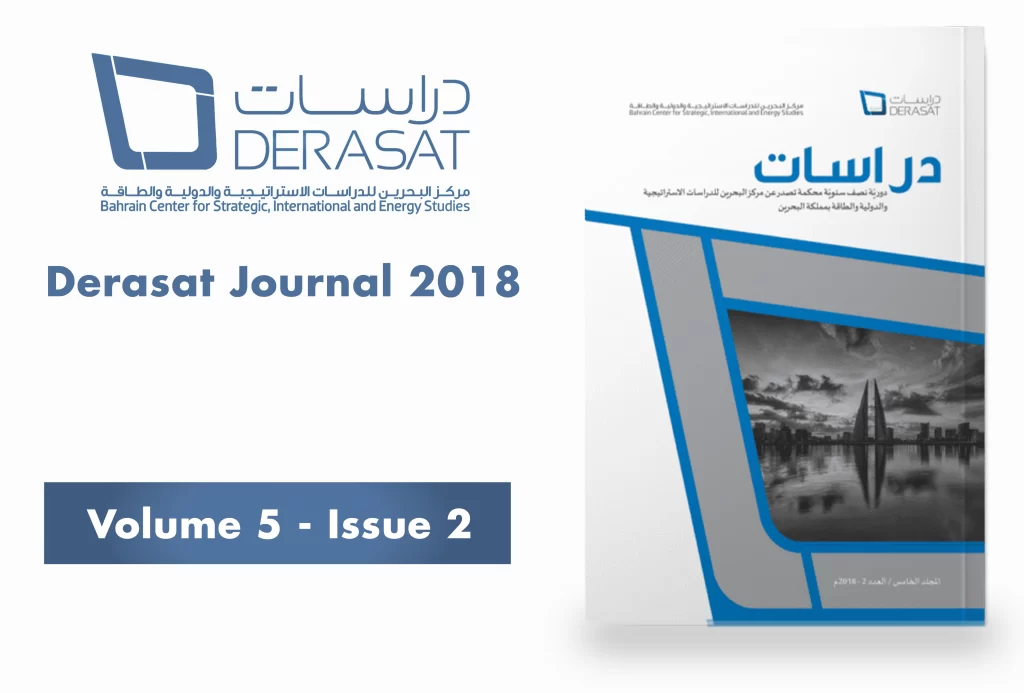
The second edition of the DERASAT Journal 2018 includes four main sections covering international security and trade, energy security, regional conflict and a final section with book reviews.
Transitioning from an oil economy to a knowledge economy
As Bahrain gears up to focus on becoming a knowledge-based economy, analyst, Ghada Abdullah looks into what this means for Bahrain and how it can be achieved.
Eni Enrico Mattei Foundation visits DERASAT
Derasat received a delegation from the Eni Enrico Mattei Foundation (FEEM), an Italian think tank focusing on global change, and representatives of the United Nations Industrial Development Organization (UNIDO).
Learning from Finland: becoming a knowledge-based economy
For the second consecutive year, Finland topped the list of the happiest countries in the world. Analyst, Ghada Abdulla, looks into the reasons behind this continuing phenomenon….
International alliances: a crucial role
International coalitions can be very successful in challenging terrorist threats; analyst, Mohammed BuHassan discusses the crucial role that coalitions and alliances play in maintaining security of nations.
Deterrence and Impact on the current Iranian crisis
Dr. Ashraf Keshk discusses the use of deterrence as a strategy of crisis management with a focus on the Iran.
Saudi Arabia & public sector salaries
Dr. Omar Al Ubaydli discusses the impacts of increasing certain wages in noting that an increase in public sector salaries should be in a very narrow range, and should be applied in a carefully selected group of jobs….
Should Gulf countries ditch customs taxes?
Dr. Omar Al Ubaydli notes that Gulf countries should work toward eliminating customs taxes, switching exclusively to VAT. The primary benefit will be in opening markets for the Gulf countries’ new non-oil exports as they implement their economic visions…..
Derasat Digest – May 2019
In which direction is the crisis heading?
There are many analyses that attempt to categorize the current crisis between the United States and Iran – Dr. Ashraf Keshk explains the distinctions between levels of crisis and at how this is important when considering future scenarios.