

This study examines the impact of shale oil production on global energy markets and its implications for the Gulf Cooperation Council (GCC) states in light of declining oil prices and increasing economic pressures. The study argues that the GCC states can benefit, in addition to market competition, from the support of global environmental protection organizations that oppose the expansion of shale oil due to its environmental consequences.
The study analyzes the environmental risks associated with hydraulic fracturing technology, including groundwater contamination, increased seismic activity, and challenges related to the disposal of contaminated water. It also reviews the role of environmental protection organizations in limiting the expansion of shale oil production in the United States through political campaigns, legal pressure, and societal mobilization.
The study proposes the possibility of cooperation between the GCC states and certain environmental organizations whose positions intersect with Gulf interests, particularly with regard to limiting the expansion of shale oil production while maintaining the benefits of increased natural gas supplies. The study also argues that such cooperation may contribute to supporting Gulf oil interests, reducing competitive pressures in oil markets, and strengthening renewable energy and environmental initiatives in the GCC states.
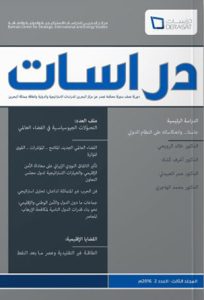
Derasat Journal 2016 – Issue 2
- The Derasat Journal aims to publish rigorous studies on issues related to the Arabian Gulf region, neighboring countries, the Middle East, and the world, particularly with regard to security and defense, economics and energy, from a comprehensive strategic perspective.
- To establish an intellectual dialogue among researchers from the Arabian Gulf region and beyond concerning current challenges and ways to address them.
- To enrich knowledge regarding the Arabian Gulf region and issues of regional and global security.
- Submitted studies must demonstrate originality and provide the journal with “added value,” away from repeating traditional topics, particularly in light of the rapid developments taking place in the region and the world.
- Studies submitted for publication should be relevant to issues concerning the Kingdom of Bahrain and the Gulf states, in addition to regional and international issues that have implications for the Gulf region.
- Submitted studies must maintain objectivity and avoid offending individuals, states, religions, or cultures.
- Studies submitted for publication must not have been previously published elsewhere, whether in print or electronically. The journal retains all intellectual property rights. Therefore, the contributor’s receipt of these conditions along with the assignment email implicitly signifies acceptance of them, and accordingly, the author may not republish material published in the journal elsewhere by any print or electronic means.
- Studies submitted for publication must adhere to recognized academic standards, whether regarding scientific methodology or citation and referencing. The journal follows the Chicago style for references and accepts submissions in both Arabic and English.
- The length of studies submitted for publication should range between 6,000–7,000 words, while book reviews and strategic report reviews should range between 1,500–2,000 words.
The themes of each issue of the journal are announced on the journal’s website at the Bahrain Center for Strategic, International and Energy Studies (DERASAT), inviting submissions related to those themes. Proposals for study ideas are received and discussed by the journal’s Editorial Board, after which the contributor is informed of the Board’s decision. In addition, the Editor-in-Chief may commission certain researchers to prepare studies in line with the journal’s work plan.
- No studies are published in the journal unless approved by the Peer-Review Committee (consisting of two reviewers), which has the authority to accept, reject, or request revisions from the author. The Editor-in-Chief informs the author of the reviewers’ final decision.
- Peer review is conducted by submitting the study without reference to the author’s name, accompanied by the peer-review form published on the journal’s website at the Derasat Center. The form includes four academic criteria: relevance and scope, originality and contribution, theoretical and analytical dimensions, and structure and clarity, in addition to any further comments the reviewer may wish to provide.
- A diverse list of reviewers from various specializations is selected in accordance with the objectives of the journal and the nature of the studies published therein.
Editor-in-Chief
- H.E. Dr. Shaikh Abdulla bin Ahmed bin Abdulla Al Khalifa
Chairman of the Board of Trustees Bahrain Center for Strategic, International and Energy Studies (Derasat) Kingdom of Bahrain
Managing Editor
- Dr. Ashraf Mohammed Keshk
Director of the International and Strategic Studies Program Bahrain Center for Strategic, International and Energy Studies (DERASAT) Kingdom of Bahrain
Dr. Ashraf Mohamed Keshk is a Senior Strategic Studies Expert specializing in Gulf and regional security, with more than three decades of research and academic experience. He received his PhD in Political Science from Cairo University in 2009, with a dissertation on the development of Gulf regional security since 2003: Study on the Impact of NATO Strategy,, which was awarded Best PhD Thesis. In the same year, he obtained a Diploma in Defense Studies from the NATO Defense College in Rome.
He has worked at the Bahrain Center for Strategic, International and Energy Studies (Derasat) since 2012 and currently serves as Director of the Program of Strategic and International Studies. His expertise focuses on Gulf security, defense policies, maritime security, and crisis management. He also served as an Academic Mentor and Lecturer at the NATO Defense College from 2009 to 2018 and has participated extensively in international academic, training, and conference activities.
Dr. Keshk has published extensively on Gulf and regional security. His major books include The Development of Gulf Regional Security since 2003: Study on the Impact of NATO Strategy,, Western Policies Toward the Security of the Arabian Gulf, NATO and the Gulf Countries (Springer, 2021), Maritime Security of the Arab Gulf States (Springer, 2022), and Security and Defense Policies of the Arabian Gulf Countries (2024). He also co-edited Gulf Cooperation Council Achievements and Challenges in 2025.
Associate Editors
- Omar Al-Ubaydli
Studies and Research Director
Bahrain Center for Strategic, International and Energy Studies (DERASAT), Bahrain
- Dr. Abdullah Al-Abbasi
Director of the Energy and Environment Program
Bahrain Center for Strategic, International and Energy Studies (DERASAT), Bahrain
Members
- Dr. Christian Koch
Executive Manager, Gulf Research Center Foundation Brussels and Director of Research
Gulf Research Center Kingdom of Belgium/ Kingdom of Saudi Arabia
- Dr. Osamah Alsayeghi
Research Scientist
Kuwait Institute for Scientific Research (KISR) Nonresident Scholar, Rice University’s Baker Institute for Public Policy State of Kuwait
- Dr. Moataz Salama
Director, Arabian Gulf Program and Head of the Arab and Regional Studies Unit
Al-Ahram Center for Political and Strategic Studies Arab Republic of Egypt
- Dr. Athraa Sayed Abbas Al-Mosawi
Dean of Graduate Studies & Scientific Research, University of Bahrain
Member of the Board of Trustees, Bahrain Center for Strategic, International and Energy Studies (Derasat) Kingdom of Bahrain
A semi-annual specialized journal issued by the Bahrain Center for Strategic, International and Energy Studies in the Kingdom of Bahrain. The journal aims to public studies and reports on political, international, economic, security, energy, and cyberspace issues that relate to strategic issues in the broad sense of the term, and that focus on Arabian Gulf issues in Arabic and English.
Employing Global Environmental Protection Organizations to Serve the Oil Interests of the Gulf Cooperation Council States in the Era of Shale Oil
JASTA … and Its Implications for the International System
The Bahrain Center for Strategic, International and Energy Studies “Derasat” organized a seminar entitled “JASTA … and Its Implications for the International System” on Tuesday, 18 October 2016. The seminar included four principal themes in addition to the opening address delivered by the Chairman of the Board of Trustees of the Bahrain Center for Strategic, International and Energy Studies, Mr. Khalid bin Ibrahim Al Fadhalah. The seminar addressed the following themes:
1. Features of the current international system.
2. The international system: between sovereignty and the interests of major powers.
3. The economic implications of the JASTA law.
4. International relations between the international order and disorder.
The passage of the United States Congress law known as the “Justice Against Sponsors of Terrorism Act” (JASTA) represented a highly dangerous development concerning the principles and foundations of international law governing relations among states, foremost among them the principle of sovereign immunity, which had traditionally prevented states and their officials from being prosecuted. Given the strategic importance of the JASTA law at the present time, the Derasat Journal deemed it appropriate to publish the proceedings of the seminar and the studies presented therein as the principal study in this issue.
1. Features of the current international system.
2. The international system: between sovereignty and the interests of major powers.
3. The economic implications of the JASTA law.
4. International relations between the international order and disorder.
The passage of the United States Congress law known as the “Justice Against Sponsors of Terrorism Act” (JASTA) represented a highly dangerous development concerning the principles and foundations of international law governing relations among states, foremost among them the principle of sovereign immunity, which had traditionally prevented states and their officials from being prosecuted. Given the strategic importance of the JASTA law at the present time, the Derasat Journal deemed it appropriate to publish the proceedings of the seminar and the studies presented therein as the principal study in this issue.
Non-State Groups and National and Regional Security: Toward Building the Capacities of Developing States to Combat Contemporary Terrorism
This study examines the factors that contributed to the rise of non-state actors and their growing impact on national and regional security. It argues that globalization, weak state institutions, regional instability, and advances in communication technology have all facilitated the expansion of transnational groups such as ISIS, al-Qaeda, and Hezbollah.
The paper highlights several characteristics of contemporary non-state groups, including their ability to adapt quickly to changing conditions, exploit sectarian and political divisions, and use geography, media, and technology to strengthen influence and recruitment. It also discusses organizations that combine political and military roles, enabling them to function as entities parallel to the state and challenge state sovereignty.
The study further examines the dynamics of cooperation and competition among these groups and the role of regional actors, particularly Iran, in supporting armed non-state organizations. It concludes by emphasizing the need for comprehensive strategies to combat contemporary terrorism through military, intellectual, media, and institutional approaches, alongside supporting stability and state-building efforts in crisis-affected states.
The paper highlights several characteristics of contemporary non-state groups, including their ability to adapt quickly to changing conditions, exploit sectarian and political divisions, and use geography, media, and technology to strengthen influence and recruitment. It also discusses organizations that combine political and military roles, enabling them to function as entities parallel to the state and challenge state sovereignty.
The study further examines the dynamics of cooperation and competition among these groups and the role of regional actors, particularly Iran, in supporting armed non-state organizations. It concludes by emphasizing the need for comprehensive strategies to combat contemporary terrorism through military, intellectual, media, and institutional approaches, alongside supporting stability and state-building efforts in crisis-affected states.
Scenarios of Unconventional Energy Production and Their Economic Effects on the Gulf Cooperation Council States
Unconventional energy has become one of the major forms of energy production since the mid-1990s, driven by the decline in new discoveries of conventional energy resources, particularly oil and gas, alongside growing concerns within international energy organizations and agencies regarding oil depletion and the rise in global energy prices to levels that signaled the possibility of a global energy crisis.
This study examines the proposed scenarios for unconventional energy production and their economic implications for the Gulf Cooperation Council (GCC) states. The research is based on the assumption that the emergence of unconventional energy sources in regions with high energy consumption would not significantly affect the volume of hydrocarbon exports from GCC states but would instead influence global energy prices for a limited period of time.
The study concludes that the research hypothesis corresponds with both current and future economic realities, indicating that unconventional energy production primarily affects global energy pricing dynamics rather than fundamentally reducing the strategic importance of Gulf hydrocarbon exports.
This study examines the proposed scenarios for unconventional energy production and their economic implications for the Gulf Cooperation Council (GCC) states. The research is based on the assumption that the emergence of unconventional energy sources in regions with high energy consumption would not significantly affect the volume of hydrocarbon exports from GCC states but would instead influence global energy prices for a limited period of time.
The study concludes that the research hypothesis corresponds with both current and future economic realities, indicating that unconventional energy production primarily affects global energy pricing dynamics rather than fundamentally reducing the strategic importance of Gulf hydrocarbon exports.
The Art of ISIS’s Asymmetric Warfare: A Strategic Analysis
This paper analyzes ISIS’s political and military strategies within the framework of asymmetric warfare and examines their implications for the security of the Gulf Cooperation Council (GCC) states. The study argues that ISIS exploited instability, sectarian divisions, weak state institutions, and security vacuums in Syria and Iraq in order to establish the so-called “Islamic State” and secure economic and territorial influence.
The paper explains that ISIS initially relied on avoiding direct confrontation with regular armies and instead focused on selective attacks against vulnerable targets. However, the organization later shifted toward broader military confrontation in Iraq and Syria, which exposed weaknesses in its strategy and contributed to clashes with Sunni forces and rival armed groups.
The study also examines the relationship between terrorism and asymmetric warfare, highlighting the rise of transnational terrorist movements and their impact on regional security. In this context, the paper discusses Iran’s support for non-state actors and proxy groups as part of its asymmetric strategy to expand regional influence without direct military confrontation.
The paper concludes that both ISIS and Iran rely on political and ideological narratives, media and technological tools, and attacks on high-value targets to achieve strategic objectives. It emphasizes the importance of strengthening Gulf intelligence and security capabilities to confront asymmetric threats and transnational terrorism.
The paper explains that ISIS initially relied on avoiding direct confrontation with regular armies and instead focused on selective attacks against vulnerable targets. However, the organization later shifted toward broader military confrontation in Iraq and Syria, which exposed weaknesses in its strategy and contributed to clashes with Sunni forces and rival armed groups.
The study also examines the relationship between terrorism and asymmetric warfare, highlighting the rise of transnational terrorist movements and their impact on regional security. In this context, the paper discusses Iran’s support for non-state actors and proxy groups as part of its asymmetric strategy to expand regional influence without direct military confrontation.
The paper concludes that both ISIS and Iran rely on political and ideological narratives, media and technological tools, and attacks on high-value targets to achieve strategic objectives. It emphasizes the importance of strengthening Gulf intelligence and security capabilities to confront asymmetric threats and transnational terrorism.
The Impact of the Iranian Nuclear Agreement on the Regional Security Equation and the Strategic Options of the GCC States
The Iranian nuclear agreement signed between Iran and the P5+1 group in July 2015 represented a significant development in shaping Western policy toward Iran and in promoting a peaceful resolution to the Iranian nuclear file. However, the concerns of the Gulf Cooperation Council (GCC) states extend beyond the technical aspects of the agreement related to Iran’s peaceful and non-peaceful nuclear activities. These concerns are closely linked to the broader regional and international environments in which the agreement was concluded.
The study argues that the relative retreat of the United States from direct involvement in regional crises, alongside its preference for managing rather than resolving such conflicts, has contributed to growing uncertainty regarding regional security. At the same time, Russia’s increasing involvement in regional affairs, particularly through its military intervention in the Syrian crisis and the strengthening of the Russian-Iranian alliance, has further intensified GCC concerns regarding the future regional balance of power.
Within this context, the study examines the implications of the Iranian nuclear agreement for the regional security system, both in the present and the future, and explores the strategic options available to the GCC states in confronting the potential consequences of the agreement on regional security as a whole.
The study argues that the relative retreat of the United States from direct involvement in regional crises, alongside its preference for managing rather than resolving such conflicts, has contributed to growing uncertainty regarding regional security. At the same time, Russia’s increasing involvement in regional affairs, particularly through its military intervention in the Syrian crisis and the strengthening of the Russian-Iranian alliance, has further intensified GCC concerns regarding the future regional balance of power.
Within this context, the study examines the implications of the Iranian nuclear agreement for the regional security system, both in the present and the future, and explores the strategic options available to the GCC states in confronting the potential consequences of the agreement on regional security as a whole.
The New Global Sphere Features … Indicators … Influential Powers
This study examines the major global transformations resulting from the accumulation of human knowledge, industrial revolutions, and the information revolution, and their impact on shaping the modern international order. It explains how the Industrial Revolution reshaped political, economic, and social structures through the expansion of global trade, the rise of industrial societies, and the growing influence of major powers. The Information Revolution, however, produced a deeper transformation through the emergence of digital space, which transcended traditional state borders and redefined the concepts of power, sovereignty, and conflict.
The study highlights contemporary geopolitical transformations in which conflicts have become increasingly complex and interconnected at the local, regional, and international levels. It emphasizes the emergence of “transformational power” based on digital technology, knowledge, and the ability to influence societies and states without relying solely on conventional military force. The study further argues that the information revolution has contributed to the rise of transnational groups, the destabilization of certain states, and the emergence of new challenges related to digital security and violations of state sovereignty, particularly in developing countries.
In addition, the study discusses the gradual shift of global power from the West to the East, particularly with the rise of China as a leading global economic power and the growing economic roles of Asian and Middle Eastern states. It also addresses challenges related to the future of energy and the transition toward non-oil alternatives. The study concludes that the world is entering a new historical phase that requires redefining concepts of power, sovereignty, and security, while developing state capabilities to adapt to rapid digital and economic transformations.
The study highlights contemporary geopolitical transformations in which conflicts have become increasingly complex and interconnected at the local, regional, and international levels. It emphasizes the emergence of “transformational power” based on digital technology, knowledge, and the ability to influence societies and states without relying solely on conventional military force. The study further argues that the information revolution has contributed to the rise of transnational groups, the destabilization of certain states, and the emergence of new challenges related to digital security and violations of state sovereignty, particularly in developing countries.
In addition, the study discusses the gradual shift of global power from the West to the East, particularly with the rise of China as a leading global economic power and the growing economic roles of Asian and Middle Eastern states. It also addresses challenges related to the future of energy and the transition toward non-oil alternatives. The study concludes that the world is entering a new historical phase that requires redefining concepts of power, sovereignty, and security, while developing state capabilities to adapt to rapid digital and economic transformations.

