

With the growing demand for electricity, increasing water scarcity in the Arab region, and the declining reserves of oil and gas, the option of relying on nuclear energy as a source for electricity generation and seawater desalination has become a strategic choice that requires serious consideration and long- and medium-term preparation. Recently, several Arab states announced their intention to incorporate electricity generation and seawater desalination into their strategies for diversifying energy sources. As a result, the Arab region—particularly the Middle East and North Africa—is expected to witness the construction of numerous nuclear power plants in the coming years.
The Arab Atomic Energy Agency has also adopted a strategic project extending until 2020 entitled “Strengthening the Infrastructure of Arab States for the Establishment of Nuclear Power Plants for Electricity Generation.” Arab states are therefore in urgent need of establishing strong infrastructure that would enable them to begin constructing their first nuclear plants for electricity generation and seawater desalination. Evaluating the essential infrastructure components of nuclear power projects is considered necessary to ensure the success of such projects, identify weaknesses in nuclear programs, prioritize needs, and support continuous improvement.
Four Arab states currently possess clear plans for the establishment of nuclear power plants for electricity generation and seawater desalination: the United Arab Emirates, the Arab Republic of Egypt, the Hashemite Kingdom of Jordan, and the Kingdom of Saudi Arabia. The UAE has already begun constructing four nuclear reactors with a capacity of 1,400 megawatts each and plans to establish ten additional nuclear plants. Egypt has completed plans for two nuclear reactors and proposed the construction of two more. Jordan completed planning for two power reactors with a capacity of 1,000 electrical megawatts, while Saudi Arabia proposed the establishment of sixteen power reactors with a total capacity of 17,000 electrical megawatts.
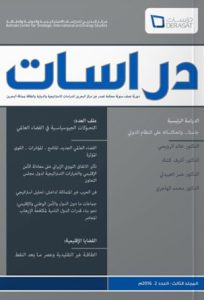
Derasat Journal 2016 – Issue 1
- The Derasat Journal aims to publish rigorous studies on issues related to the Arabian Gulf region, neighboring countries, the Middle East, and the world, particularly with regard to security and defense, economics and energy, from a comprehensive strategic perspective.
- To establish an intellectual dialogue among researchers from the Arabian Gulf region and beyond concerning current challenges and ways to address them.
- To enrich knowledge regarding the Arabian Gulf region and issues of regional and global security.
- Submitted studies must demonstrate originality and provide the journal with “added value,” away from repeating traditional topics, particularly in light of the rapid developments taking place in the region and the world.
- Studies submitted for publication should be relevant to issues concerning the Kingdom of Bahrain and the Gulf states, in addition to regional and international issues that have implications for the Gulf region.
- Submitted studies must maintain objectivity and avoid offending individuals, states, religions, or cultures.
- Studies submitted for publication must not have been previously published elsewhere, whether in print or electronically. The journal retains all intellectual property rights. Therefore, the contributor’s receipt of these conditions along with the assignment email implicitly signifies acceptance of them, and accordingly, the author may not republish material published in the journal elsewhere by any print or electronic means.
- Studies submitted for publication must adhere to recognized academic standards, whether regarding scientific methodology or citation and referencing. The journal follows the Chicago style for references and accepts submissions in both Arabic and English.
- The length of studies submitted for publication should range between 6,000–7,000 words, while book reviews and strategic report reviews should range between 1,500–2,000 words.
The themes of each issue of the journal are announced on the journal’s website at the Bahrain Center for Strategic, International and Energy Studies (DERASAT), inviting submissions related to those themes. Proposals for study ideas are received and discussed by the journal’s Editorial Board, after which the contributor is informed of the Board’s decision. In addition, the Editor-in-Chief may commission certain researchers to prepare studies in line with the journal’s work plan.
- No studies are published in the journal unless approved by the Peer-Review Committee (consisting of two reviewers), which has the authority to accept, reject, or request revisions from the author. The Editor-in-Chief informs the author of the reviewers’ final decision.
- Peer review is conducted by submitting the study without reference to the author’s name, accompanied by the peer-review form published on the journal’s website at the Derasat Center. The form includes four academic criteria: relevance and scope, originality and contribution, theoretical and analytical dimensions, and structure and clarity, in addition to any further comments the reviewer may wish to provide.
- A diverse list of reviewers from various specializations is selected in accordance with the objectives of the journal and the nature of the studies published therein.
Editor-in-Chief
- H.E. Dr. Shaikh Abdulla bin Ahmed bin Abdulla Al Khalifa
Chairman of the Board of Trustees Bahrain Center for Strategic, International and Energy Studies (Derasat) Kingdom of Bahrain
Managing Editor
- Dr. Ashraf Mohammed Keshk
Director of the International and Strategic Studies Program Bahrain Center for Strategic, International and Energy Studies (DERASAT) Kingdom of Bahrain
Dr. Ashraf Mohamed Keshk is a Senior Strategic Studies Expert specializing in Gulf and regional security, with more than three decades of research and academic experience. He received his PhD in Political Science from Cairo University in 2009, with a dissertation on the development of Gulf regional security since 2003: Study on the Impact of NATO Strategy,, which was awarded Best PhD Thesis. In the same year, he obtained a Diploma in Defense Studies from the NATO Defense College in Rome.
He has worked at the Bahrain Center for Strategic, International and Energy Studies (Derasat) since 2012 and currently serves as Director of the Program of Strategic and International Studies. His expertise focuses on Gulf security, defense policies, maritime security, and crisis management. He also served as an Academic Mentor and Lecturer at the NATO Defense College from 2009 to 2018 and has participated extensively in international academic, training, and conference activities.
Dr. Keshk has published extensively on Gulf and regional security. His major books include The Development of Gulf Regional Security since 2003: Study on the Impact of NATO Strategy,, Western Policies Toward the Security of the Arabian Gulf, NATO and the Gulf Countries (Springer, 2021), Maritime Security of the Arab Gulf States (Springer, 2022), and Security and Defense Policies of the Arabian Gulf Countries (2024). He also co-edited Gulf Cooperation Council Achievements and Challenges in 2025.
Associate Editors
- Omar Al-Ubaydli
Studies and Research Director
Bahrain Center for Strategic, International and Energy Studies (DERASAT), Bahrain
- Dr. Abdullah Al-Abbasi
Director of the Energy and Environment Program
Bahrain Center for Strategic, International and Energy Studies (DERASAT), Bahrain
Members
- Dr. Christian Koch
Executive Manager, Gulf Research Center Foundation Brussels and Director of Research
Gulf Research Center Kingdom of Belgium/ Kingdom of Saudi Arabia
- Dr. Osamah Alsayeghi
Research Scientist
Kuwait Institute for Scientific Research (KISR) Nonresident Scholar, Rice University’s Baker Institute for Public Policy State of Kuwait
- Dr. Moataz Salama
Director, Arabian Gulf Program and Head of the Arab and Regional Studies Unit
Al-Ahram Center for Political and Strategic Studies Arab Republic of Egypt
- Dr. Athraa Sayed Abbas Al-Mosawi
Dean of Graduate Studies & Scientific Research, University of Bahrain
Member of the Board of Trustees, Bahrain Center for Strategic, International and Energy Studies (Derasat) Kingdom of Bahrain
A semi-annual specialized journal issued by the Bahrain Center for Strategic, International and Energy Studies in the Kingdom of Bahrain. The journal aims to public studies and reports on political, international, economic, security, energy, and cyberspace issues that relate to strategic issues in the broad sense of the term, and that focus on Arabian Gulf issues in Arabic and English.
Arab Nuclear Capabilities for Electricity Generation and Seawater Desalination: Potentials and Concerns
Change in the International System and Global Centers of Power: A Future Vision
The study of change in the international system revolves around several themes, including examining its nature and whether it is a deliberate phenomenon or a spontaneous activity, as well as identifying the forces and factors influencing its occurrence and assessing its effectiveness in shaping foreign policy and directing the strategies of global powers. These strategies may aim either toward building a better world that benefits from the achievements of civilization or toward a world filled with wars and international conflicts. Accordingly, change is considered one of the most significant phenomena affecting the trajectories and interactions of the international system through its influence on the system’s structure, interactive framework, and the performance of its units.
Change results from the events and transformations occurring within domestic, regional, and international environments, as well as from the motivations and incentives they generate, which drive the emergence of a new international “movement of change” adopted by global powers seeking to secure their interests and objectives and to demonstrate their capabilities and influence in managing and directing international interactions. The decline in the role and status of the United States has created a degree of vacuum that has contributed to increased instability and the deterioration of international security, particularly in Asia and the Middle East. This decline has also strengthened the growing roles of Russia and China in influencing the management of international crises according to their interests, thereby constraining American dominance over international affairs and global interactions.
Therefore, any attempt to foresee the future of the international system and global centers of power must be preceded by an analysis of the nature of change, the variables shaping it, and the forces influencing the international system.
Change results from the events and transformations occurring within domestic, regional, and international environments, as well as from the motivations and incentives they generate, which drive the emergence of a new international “movement of change” adopted by global powers seeking to secure their interests and objectives and to demonstrate their capabilities and influence in managing and directing international interactions. The decline in the role and status of the United States has created a degree of vacuum that has contributed to increased instability and the deterioration of international security, particularly in Asia and the Middle East. This decline has also strengthened the growing roles of Russia and China in influencing the management of international crises according to their interests, thereby constraining American dominance over international affairs and global interactions.
Therefore, any attempt to foresee the future of the international system and global centers of power must be preceded by an analysis of the nature of change, the variables shaping it, and the forces influencing the international system.
Nuclear and Radiological Energy Security: The Legislative and Regulatory Framework
Nuclear and radiological energy possess established benefits that contribute significantly to human development and prosperity. However, they remain difficult to manage in terms of achieving the desired balance between their benefits and risks. Nuclear energy also remains burdened by its first use in 1945, when it was employed destructively in the Japanese cities of Hiroshima and Nagasaki, which has kept it under constant international scrutiny. In addition, nuclear accidents continue to generate widespread international fear, despite the relatively low number of casualties compared to accidents associated with other energy sources.
The reality of nuclear energy use became even more complex with the rise of terrorism and the emergence of reports warning of the dangers of nuclear terrorism. This situation necessitated responses through the requirements of nuclear security, leading to the adoption of binding resolutions by the United Nations Security Council under Chapter VII of the UN Charter, alongside international agreements aimed at confronting such threats and expanding the mandate of the International Atomic Energy Agency to include nuclear security.
Since 2010, nuclear security has also become the subject of an international summit held every two years with the participation of world leaders, amid growing concerns regarding the possibility of terrorist groups acquiring nuclear weapons. There are fears that future developments may lead to the imposition of new restrictions on the use of nuclear and radiological energy. Whereas providing guarantees against the non-peaceful use of nuclear technology was once the sole condition for states to benefit from nuclear energy and technologies, additional requirements concerning nuclear safety and security may increasingly become essential conditions in the future. This highlights the importance of nuclear and radiological energy security, as well as the legislative and regulatory frameworks necessary to ensure the continued benefits of these technologies while preventing their harmful consequences, which this study seeks to examine.
The reality of nuclear energy use became even more complex with the rise of terrorism and the emergence of reports warning of the dangers of nuclear terrorism. This situation necessitated responses through the requirements of nuclear security, leading to the adoption of binding resolutions by the United Nations Security Council under Chapter VII of the UN Charter, alongside international agreements aimed at confronting such threats and expanding the mandate of the International Atomic Energy Agency to include nuclear security.
Since 2010, nuclear security has also become the subject of an international summit held every two years with the participation of world leaders, amid growing concerns regarding the possibility of terrorist groups acquiring nuclear weapons. There are fears that future developments may lead to the imposition of new restrictions on the use of nuclear and radiological energy. Whereas providing guarantees against the non-peaceful use of nuclear technology was once the sole condition for states to benefit from nuclear energy and technologies, additional requirements concerning nuclear safety and security may increasingly become essential conditions in the future. This highlights the importance of nuclear and radiological energy security, as well as the legislative and regulatory frameworks necessary to ensure the continued benefits of these technologies while preventing their harmful consequences, which this study seeks to examine.
Possible Future Scenarios for the Development of Nuclear Proliferation Policies: A Strategic Vision in the Middle East Region
This study examines and analyzes the possible future scenarios for the development of nuclear energy proliferation policies through presenting several potential scenarios. These range from the continuation of the current nuclear situation in the region—assuming the continuation of the Israeli nuclear monopoly over nuclear weapons, the maintenance of the Iranian nuclear program at its current technical level, and the continuation of Arab nuclear programs at their existing level—to scenarios involving changes in the regional nuclear landscape. Such changes could include Israel officially declaring its nuclear capabilities, particularly in light of its dissatisfaction with the Iranian nuclear agreement with the West, or Iran announcing possession of nuclear weapons or highly enriched uranium sufficient for producing nuclear weapons in the event of complications in implementing the nuclear agreement. This scenario, however, is considered unlikely due to the currently available information regarding the Iranian nuclear program.
The study also discusses a scenario involving the expansion of nuclear capabilities among several states in the region, based on the assumption that regional nuclear conditions could push Arab states toward collective withdrawal from the Nuclear Non-Proliferation Treaty and the announcement of advances in nuclear capabilities, such as uranium enrichment technology or enriched uranium previously acquired. This scenario is also viewed as unlikely due to the availability of information regarding Arab nuclear programs and capabilities, making surprises in this regard improbable.
A final scenario concerns the spread of peaceful nuclear programs through the establishment of nuclear power plants for electricity generation and the development of a complete nuclear fuel cycle, especially given that pre-operational testing had already begun for the first nuclear power plant in the United Arab Emirates, while Egypt, Saudi Arabia, and Jordan were also planning to establish nuclear plants.
The study further discusses a strategic vision for dealing with these scenarios, emphasizing the political and strategic option of establishing the Middle East as a zone free of weapons of mass destruction. This option is regarded as legitimate and acceptable at both the international and regional levels and is supported through the peaceful use of nuclear technology, particularly by deepening peaceful applications of atomic energy through nuclear power plants for electricity generation and the development of a nuclear fuel cycle.
The study concluded that, in light of the serious effects and repercussions resulting from some scenarios, the Arab states must act practically to prepare well for the possible repercussions and impacts in the event of a breakdown of the nuclear situation in the region, and to pay great attention to issues related to Arab capabilities in the nuclear field as part of the current and future regional conditions. Therefore, there is an inevitable necessity for the Arab states to take the initiative in activating their nuclear programs and developing the peaceful uses of nuclear energy within them. Dealing effectively with nuclear proliferation policies in the region should be based on a combination of both the technological option and the diplomatic option and should not rely on only one option. The position of the Arab states is strengthened by the fact that all of them are parties to most international nuclear agreements.
The study also discusses a scenario involving the expansion of nuclear capabilities among several states in the region, based on the assumption that regional nuclear conditions could push Arab states toward collective withdrawal from the Nuclear Non-Proliferation Treaty and the announcement of advances in nuclear capabilities, such as uranium enrichment technology or enriched uranium previously acquired. This scenario is also viewed as unlikely due to the availability of information regarding Arab nuclear programs and capabilities, making surprises in this regard improbable.
A final scenario concerns the spread of peaceful nuclear programs through the establishment of nuclear power plants for electricity generation and the development of a complete nuclear fuel cycle, especially given that pre-operational testing had already begun for the first nuclear power plant in the United Arab Emirates, while Egypt, Saudi Arabia, and Jordan were also planning to establish nuclear plants.
The study further discusses a strategic vision for dealing with these scenarios, emphasizing the political and strategic option of establishing the Middle East as a zone free of weapons of mass destruction. This option is regarded as legitimate and acceptable at both the international and regional levels and is supported through the peaceful use of nuclear technology, particularly by deepening peaceful applications of atomic energy through nuclear power plants for electricity generation and the development of a nuclear fuel cycle.
The study concluded that, in light of the serious effects and repercussions resulting from some scenarios, the Arab states must act practically to prepare well for the possible repercussions and impacts in the event of a breakdown of the nuclear situation in the region, and to pay great attention to issues related to Arab capabilities in the nuclear field as part of the current and future regional conditions. Therefore, there is an inevitable necessity for the Arab states to take the initiative in activating their nuclear programs and developing the peaceful uses of nuclear energy within them. Dealing effectively with nuclear proliferation policies in the region should be based on a combination of both the technological option and the diplomatic option and should not rely on only one option. The position of the Arab states is strengthened by the fact that all of them are parties to most international nuclear agreements.
The Future of Arab Relations with South American States
Observers of the development of Arab relations with the countries of South America over recent years can note that these relations have advanced rapidly across various economic, political, and cultural fields, as a result of the transformations taking place in both the Middle East and South America at different levels. Amid the growing challenges facing both Arab and South American states, the two sides recognized the importance of strengthening political, economic, and cultural relations. This was reflected in the repeated high-level visits exchanged between leaders of both regions, the signing of hundreds of agreements regulating relations in various fields, the establishment of joint committees and councils to discuss areas of cooperation, the frequent holding of conferences, meetings, and joint discussions between senior officials from both sides, as well as the expansion of mutual diplomatic representation.
Despite the positive development witnessed in Arab–South American relations during recent years at both the collective and bilateral levels, and despite the existence of many common interests and strong motivations for cooperation, the achieved level of cooperation remains below expectations. This is due to several factors, some related to domestic conditions within the countries of both regions, while others are linked to changes in the regional and international environments.
Within this context, the study aims to monitor and analyze the various dimensions of Arab–South American relations and attempts to foresee the future of these relations by identifying the obstacles and challenges that hinder their advancement to the desired level. The study concludes by presenting mechanisms and means to strengthen Arab–South American relations in ways that enhance shared interests, achieve economic stability for their peoples, and improve their position on the international stage.
Despite the positive development witnessed in Arab–South American relations during recent years at both the collective and bilateral levels, and despite the existence of many common interests and strong motivations for cooperation, the achieved level of cooperation remains below expectations. This is due to several factors, some related to domestic conditions within the countries of both regions, while others are linked to changes in the regional and international environments.
Within this context, the study aims to monitor and analyze the various dimensions of Arab–South American relations and attempts to foresee the future of these relations by identifying the obstacles and challenges that hinder their advancement to the desired level. The study concludes by presenting mechanisms and means to strengthen Arab–South American relations in ways that enhance shared interests, achieve economic stability for their peoples, and improve their position on the international stage.
The Role of the Kingdom of Saudi Arabia in Combating New Terrorism
The Kingdom of Saudi Arabia, represented by Deputy Crown Prince Mohammed bin Salman Al Saud, announced the establishment of the Islamic Military Alliance to Combat Terrorism. This announcement represented a new qualitative shift in Saudi policy and an additional military and diplomatic instrument that enhances the Kingdom’s presence on the regional and international stages as an influential actor. The alliance also constituted a continuation of the call made by the late Saudi King Abdullah bin Abdulaziz—may he rest in peace—for the establishment of an international center to combat terrorism. This alliance is viewed as an important tool that operates through both hard and soft means simultaneously. Based on this context, the researcher seeks to define and characterize the phenomenon of terrorism and to examine the current regional transformations that have produced numerous security threats to Saudi Arabia and the Gulf Cooperation Council states in general. These developments have generated what the researcher attempts to describe as “new terrorism,” characterized by evolving methods and renewed approaches.
The study also analyzes the terrorist incidents witnessed specifically in Saudi Arabia and more broadly in the Gulf region, in an attempt to connect regional developments with their domestic repercussions. Within this framework, the researcher raises several questions aimed at testing Eric Hoffer’s “True Believer” theory.
The researcher further proposes several recommendations for addressing the phenomenon at the regional level, including the importance of neighboring states focusing on regional legislation in order to ensure regional and international support in confronting terrorism. The study goes beyond the legal dimension to what the researcher terms “military diplomacy,” a concept that combines both hard and soft power, law, and military intervention.
The study also analyzes the terrorist incidents witnessed specifically in Saudi Arabia and more broadly in the Gulf region, in an attempt to connect regional developments with their domestic repercussions. Within this framework, the researcher raises several questions aimed at testing Eric Hoffer’s “True Believer” theory.
The researcher further proposes several recommendations for addressing the phenomenon at the regional level, including the importance of neighboring states focusing on regional legislation in order to ensure regional and international support in confronting terrorism. The study goes beyond the legal dimension to what the researcher terms “military diplomacy,” a concept that combines both hard and soft power, law, and military intervention.
The Syrian Crisis and the Positions of the Major Powers
The Syrian crisis began as a peaceful revolution calling for freedom and dignity against an authoritarian regime that oppressed the majority of the Syrian people. However, the Syrian regime’s forces confronted the uprising with violence and repression, transforming it into a civil war that led to the deaths of thousands of Syrians and the displacement of millions to neighboring countries and other parts of the world.
During the crisis, the Russian role emerged prominently through political support for the Syrian regime in the United Nations Security Council and the repeated use of the veto power to prevent the condemnation of its allied regime. Russia also provided military support to the Syrian government by arming and training its forces and sending military experts following the decline and retreat of Syrian government forces. Russia further aligned itself with Iran, which offered significant financial, economic, and military assistance to the Syrian regime and facilitated the arrival of sectarian militias to fight alongside Syrian government forces. As a result, an axis consisting of Russia, Iran, Iraq, Syria, and Hezbollah in Lebanon emerged, in contrast to the support provided by Turkey and several Gulf Cooperation Council states to the Syrian opposition.
The study argues that American policy toward the Syrian crisis was largely shaped by the new orientations of U.S. policy in the Middle East. More broadly, the paper observes that international actors were the most influential forces shaping the course of the crisis, particularly in light of the Arab League’s inability to reach a resolution. Given the deep overlap among the local, regional, and international dimensions of the conflict, any future settlement of the Syrian crisis will inevitably reflect this interconnectedness.
During the crisis, the Russian role emerged prominently through political support for the Syrian regime in the United Nations Security Council and the repeated use of the veto power to prevent the condemnation of its allied regime. Russia also provided military support to the Syrian government by arming and training its forces and sending military experts following the decline and retreat of Syrian government forces. Russia further aligned itself with Iran, which offered significant financial, economic, and military assistance to the Syrian regime and facilitated the arrival of sectarian militias to fight alongside Syrian government forces. As a result, an axis consisting of Russia, Iran, Iraq, Syria, and Hezbollah in Lebanon emerged, in contrast to the support provided by Turkey and several Gulf Cooperation Council states to the Syrian opposition.
The study argues that American policy toward the Syrian crisis was largely shaped by the new orientations of U.S. policy in the Middle East. More broadly, the paper observes that international actors were the most influential forces shaping the course of the crisis, particularly in light of the Arab League’s inability to reach a resolution. Given the deep overlap among the local, regional, and international dimensions of the conflict, any future settlement of the Syrian crisis will inevitably reflect this interconnectedness.

