

This study aims to analyze the challenges facing the Arab Gulf states in their pursuit
of technology transfer, by first addressing the reasons for the Gulf countries interest in
technology transfer, especially those related to the implementation of sustainable development plans that rely heavily on digital transformation, in addition to the fact that
technology has become an area for competition at both regional and global levels.
In addition to being a strategic necessity to achieve balance with neighboring countries.
The study concluded with three main findings:
First: The Arab Gulf states attach great importance to the issue of technology transfer, which is reflected in many indicators, including those related to smart cities or by directing their interest to space, as well as the contribution of technology to achieving food security for the Arab Gulf states.
Second: The Arab Gulf states face many challenges in their endeavors to transfer technology, whether human or financial, in addition to the absence of international laws
that regulate the transfer and protection of technology, as well as the monopoly of technology by the major countries.
Third: With the importance of the efforts made by the Arab Gulf states regarding technology transfer, whether at the institutional or legislative level, they still need additional measures within an integrated strategy that takes into account the keenness to provide human resources and the necessary financial allocations and stimulate the private sector to engage in investment in that field, in addition to developing the educational system to support the achievement of the goal of localizing technology over the coming decades.
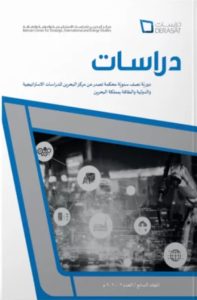
Derasat Journal 2020 – Issue 2
- The Derasat Journal aims to publish rigorous studies on issues related to the Arabian Gulf region, neighboring countries, the Middle East, and the world, particularly with regard to security and defense, economics and energy, from a comprehensive strategic perspective.
- To establish an intellectual dialogue among researchers from the Arabian Gulf region and beyond concerning current challenges and ways to address them.
- To enrich knowledge regarding the Arabian Gulf region and issues of regional and global security.
- Submitted studies must demonstrate originality and provide the journal with “added value,” away from repeating traditional topics, particularly in light of the rapid developments taking place in the region and the world.
- Studies submitted for publication should be relevant to issues concerning the Kingdom of Bahrain and the Gulf states, in addition to regional and international issues that have implications for the Gulf region.
- Submitted studies must maintain objectivity and avoid offending individuals, states, religions, or cultures.
- Studies submitted for publication must not have been previously published elsewhere, whether in print or electronically. The journal retains all intellectual property rights. Therefore, the contributor’s receipt of these conditions along with the assignment email implicitly signifies acceptance of them, and accordingly, the author may not republish material published in the journal elsewhere by any print or electronic means.
- Studies submitted for publication must adhere to recognized academic standards, whether regarding scientific methodology or citation and referencing. The journal follows the Chicago style for references and accepts submissions in both Arabic and English.
- The length of studies submitted for publication should range between 6,000–7,000 words, while book reviews and strategic report reviews should range between 1,500–2,000 words.
The themes of each issue of the journal are announced on the journal’s website at the Bahrain Center for Strategic, International and Energy Studies (DERASAT), inviting submissions related to those themes. Proposals for study ideas are received and discussed by the journal’s Editorial Board, after which the contributor is informed of the Board’s decision. In addition, the Editor-in-Chief may commission certain researchers to prepare studies in line with the journal’s work plan.
- No studies are published in the journal unless approved by the Peer-Review Committee (consisting of two reviewers), which has the authority to accept, reject, or request revisions from the author. The Editor-in-Chief informs the author of the reviewers’ final decision.
- Peer review is conducted by submitting the study without reference to the author’s name, accompanied by the peer-review form published on the journal’s website at the Derasat Center. The form includes four academic criteria: relevance and scope, originality and contribution, theoretical and analytical dimensions, and structure and clarity, in addition to any further comments the reviewer may wish to provide.
- A diverse list of reviewers from various specializations is selected in accordance with the objectives of the journal and the nature of the studies published therein.
Editor-in-Chief
- H.E. Dr. Shaikh Abdulla bin Ahmed bin Abdulla Al Khalifa
Chairman of the Board of Trustees Bahrain Center for Strategic, International and Energy Studies (Derasat) Kingdom of Bahrain
Managing Editor
- Dr. Ashraf Mohammed Keshk
Director of the International and Strategic Studies Program Bahrain Center for Strategic, International and Energy Studies (DERASAT) Kingdom of Bahrain
Dr. Ashraf Mohamed Keshk is a Senior Strategic Studies Expert specializing in Gulf and regional security, with more than three decades of research and academic experience. He received his PhD in Political Science from Cairo University in 2009, with a dissertation on the development of Gulf regional security since 2003: Study on the Impact of NATO Strategy,, which was awarded Best PhD Thesis. In the same year, he obtained a Diploma in Defense Studies from the NATO Defense College in Rome.
He has worked at the Bahrain Center for Strategic, International and Energy Studies (Derasat) since 2012 and currently serves as Director of the Program of Strategic and International Studies. His expertise focuses on Gulf security, defense policies, maritime security, and crisis management. He also served as an Academic Mentor and Lecturer at the NATO Defense College from 2009 to 2018 and has participated extensively in international academic, training, and conference activities.
Dr. Keshk has published extensively on Gulf and regional security. His major books include The Development of Gulf Regional Security since 2003: Study on the Impact of NATO Strategy,, Western Policies Toward the Security of the Arabian Gulf, NATO and the Gulf Countries (Springer, 2021), Maritime Security of the Arab Gulf States (Springer, 2022), and Security and Defense Policies of the Arabian Gulf Countries (2024). He also co-edited Gulf Cooperation Council Achievements and Challenges in 2025.
Associate Editors
- Omar Al-Ubaydli
Studies and Research Director
Bahrain Center for Strategic, International and Energy Studies (DERASAT), Bahrain
- Dr. Abdullah Al-Abbasi
Director of the Energy and Environment Program
Bahrain Center for Strategic, International and Energy Studies (DERASAT), Bahrain
Members
- Dr. Christian Koch
Executive Manager, Gulf Research Center Foundation Brussels and Director of Research
Gulf Research Center Kingdom of Belgium/ Kingdom of Saudi Arabia
- Dr. Osamah Alsayeghi
Research Scientist
Kuwait Institute for Scientific Research (KISR) Nonresident Scholar, Rice University’s Baker Institute for Public Policy State of Kuwait
- Dr. Moataz Salama
Director, Arabian Gulf Program and Head of the Arab and Regional Studies Unit
Al-Ahram Center for Political and Strategic Studies Arab Republic of Egypt
- Dr. Athraa Sayed Abbas Al-Mosawi
Dean of Graduate Studies & Scientific Research, University of Bahrain
Member of the Board of Trustees, Bahrain Center for Strategic, International and Energy Studies (Derasat) Kingdom of Bahrain
Derasat has published volume 13 of its specialized semi-annual journal, ‘Derasat’, which provides analyses of security, defence, and economic issues from a strategic perspective. H.E Dr. Shaikh Abdulla bin Ahmed Al-Khalifa, Chairman of the Derasat Center Board of Trustees and the journal’s Chief Editor, pointed out in his op-ed titled, “Opportunities and Challenges of the Modern Technological Revolution”, to the rapid global developments in technological advancements reflected in all aspects of life, and the continual release of inventions by the highly competitive Big Tech.
The volume discusses the modern technological revolution, post-Brexit EU, various tech utilizations, the East-Mediterranean gas conflict, and includes some interesting book reviews.
Challenges of Transferring Technology to the Arab Gulf states
Eastern Mediterranean conflict: A study of the implications of gas discoveries on the complexity of foreign policy interactions
This study aims to analyze the factors and causes of the escalation of the conflict in the
eastern Mediterranean, which vary between factors that create and others that drive the conflict, in addition to trying to determine the most important results that this conflict will have on regional security and the future paths of that conflict, especially in light of the presence of a large number of players at the regional and global levels, and a large mix of interests, which means the emergence of polarizations and counter polarizations, the effects of which will not be temporary, but may extend to years to come.
The study concluded with three main findings:
First: While recognizing the importance that explains the escalation of regional conflicts
and crises in this way, the most important of them is the power vacuum that provides opportunities for external interventions in these conflicts and then fueling and prolonging them.
Second: The conflict in the Eastern Mediterranean provides an example for the overlapping levels of national, regional, and global security, which means that the countries around world need to think about new mechanisms to manage these crises to ensure that they do not deviate from the usual borders towards military confrontations that represent a threat to both regional and global security.
Third: The conflict reaffirmed a dilemma facing both global and regional security, which is the absence of an international force can bind states regarding respecting the rules of international law on the seas represented by the 1982 United Nations Convention on the Law of the Sea.
eastern Mediterranean, which vary between factors that create and others that drive the conflict, in addition to trying to determine the most important results that this conflict will have on regional security and the future paths of that conflict, especially in light of the presence of a large number of players at the regional and global levels, and a large mix of interests, which means the emergence of polarizations and counter polarizations, the effects of which will not be temporary, but may extend to years to come.
The study concluded with three main findings:
First: While recognizing the importance that explains the escalation of regional conflicts
and crises in this way, the most important of them is the power vacuum that provides opportunities for external interventions in these conflicts and then fueling and prolonging them.
Second: The conflict in the Eastern Mediterranean provides an example for the overlapping levels of national, regional, and global security, which means that the countries around world need to think about new mechanisms to manage these crises to ensure that they do not deviate from the usual borders towards military confrontations that represent a threat to both regional and global security.
Third: The conflict reaffirmed a dilemma facing both global and regional security, which is the absence of an international force can bind states regarding respecting the rules of international law on the seas represented by the 1982 United Nations Convention on the Law of the Sea.
Employing Technology in Modern Financial Transactions: General Principles, and a Case Study on the Kingdom of Bahrain during the Corona Virus Crisis
This study aims to analyze one of the most prominent areas of technology employment in peaceful areas, namely financial transactions, by studying the nature of general trends in technology and financial transactions in many countries in the world and how they have developed throughout history up to the present time in areas related to financial transactions, while providing reasons for explaining that transformation and its results, in addition to focusing on the experience of the Kingdom of Bahrain as a case study on how technology can be used in financial transactions during crises such as
the corona pandemic.
The study concluded with three main findings:
First: Despite the tremendous opportunities provided by technology in terms of digitizing financial transactions, which the study explained in detail, at the same time it is not without risks, not the least of which is the potential for terrorist groups to employ the same technology for illegal practices, in addition to the fact that bank data remains vulnerable to a large degree of risk, as it can be easily penetrated by these terrorist groups, despite the precautionary measures taken by many countries.
Second: At a time when all countries of the world, including the Arab Gulf states, are witnessing an accelerated shift towards digitizing all aspects of life, including financial
transactions, there may be a need for more legislation that regulates these transactions to achieve a balance between preserving the privacy of citizens' data while at the same
time preserving the national security of countries, which has become greatly threatened by the modern technological revolution. In addition, it is necessary to provide the opportunity for citizens of all age groups to use this technology.
Third: Despite the increase in the frequency of electronic financial transactions in the Kingdom of Bahrain during the Corona pandemic, this crisis did not start this change. Rather, the crisis revealed the importance of establishing a distinct electronic structure not only as a requirement for implementing sustainable development plans, but for employing it during similar crises.
the corona pandemic.
The study concluded with three main findings:
First: Despite the tremendous opportunities provided by technology in terms of digitizing financial transactions, which the study explained in detail, at the same time it is not without risks, not the least of which is the potential for terrorist groups to employ the same technology for illegal practices, in addition to the fact that bank data remains vulnerable to a large degree of risk, as it can be easily penetrated by these terrorist groups, despite the precautionary measures taken by many countries.
Second: At a time when all countries of the world, including the Arab Gulf states, are witnessing an accelerated shift towards digitizing all aspects of life, including financial
transactions, there may be a need for more legislation that regulates these transactions to achieve a balance between preserving the privacy of citizens' data while at the same
time preserving the national security of countries, which has become greatly threatened by the modern technological revolution. In addition, it is necessary to provide the opportunity for citizens of all age groups to use this technology.
Third: Despite the increase in the frequency of electronic financial transactions in the Kingdom of Bahrain during the Corona pandemic, this crisis did not start this change. Rather, the crisis revealed the importance of establishing a distinct electronic structure not only as a requirement for implementing sustainable development plans, but for employing it during similar crises.
The European Union’s Experience and Post-Brexit Challenges Lessons learned for the Arab Gulf states
This study deals with the experience of the European Union, one of the regional security organizations stipulated in the United Nations Charter in Chapter VIII, in terms of the emergence, development, institutional structure and its interpretation within the theories of political systems. In addition to analyzing the features, that distinguishes it from other regional organizations, and illuminating some of the main challenges facing it, especially in the post-Brexit phase, as well as addressing the most important lessons learned for the Arab Gulf states as part of their efforts to develop the Cooperation Council for the Arab Gulf States.
The study concluded with three main findings:
First: The experience of the European Union is unique among similar regional security organizations. Although it started as an economic bloc, it was aiming at the same time to achieve security and political goals. Which were achieved through several successive treaties throughout the history of that system, eventually resulting in establishing a common European identity, while preserving the sovereignty of each country.
Second: Like other regional security experiences, the European Union faces many challenges given the divergence of interests among its member states in terms of the
decision-making mechanisms and the leadership of the union, as well as economic and security challenges, not the least of which is the illegal immigration. However, despite this, the Union possesses mechanisms that helps in facing these challenges with a spirit of solidarity within its member states.
Third: Despite the challenges facing that system, it is witnessing an evolution regarding collective cooperation, especially on the security level. Such as the defense cooperation document signed in 2017 by 23 European countries, the establishment of a force to con- front crises outside the European system in 2018, as well as the proposal of French President Emmanuel Macron for the establishment of a unified European army. Furthermore, the treaty of cooperation and integration between France and Germany in 2019, as well as the growing role of the European Union towards maritime security, whether in the Mediterranean or the Horn of Africa.
The study concluded with three main findings:
First: The experience of the European Union is unique among similar regional security organizations. Although it started as an economic bloc, it was aiming at the same time to achieve security and political goals. Which were achieved through several successive treaties throughout the history of that system, eventually resulting in establishing a common European identity, while preserving the sovereignty of each country.
Second: Like other regional security experiences, the European Union faces many challenges given the divergence of interests among its member states in terms of the
decision-making mechanisms and the leadership of the union, as well as economic and security challenges, not the least of which is the illegal immigration. However, despite this, the Union possesses mechanisms that helps in facing these challenges with a spirit of solidarity within its member states.
Third: Despite the challenges facing that system, it is witnessing an evolution regarding collective cooperation, especially on the security level. Such as the defense cooperation document signed in 2017 by 23 European countries, the establishment of a force to con- front crises outside the European system in 2018, as well as the proposal of French President Emmanuel Macron for the establishment of a unified European army. Furthermore, the treaty of cooperation and integration between France and Germany in 2019, as well as the growing role of the European Union towards maritime security, whether in the Mediterranean or the Horn of Africa.
The impact of technology on modern warfare: drones as a model
This study aims to analyze the employment of modern technology in the military field
and its implications on the course of the current regional conflicts. Unmanned drones, which are not only a formidable security challenge to the national security of states but rather became an essential component of state's military power.
The study concluded with three main findings:
First: At a time where the use of drones is increasing in the current conflicts, whether by states or non-state actors, it is difficult to determine the responsible entity behind these
drones' attacks and the resulting losses and damages. This is especially true when there are civilian victims and damages to vital installations. These instances require the international community to give the matter greater importance, through the passage of legislations criminalizing the use of this type of aircraft.
Second: All indications confirm that the pro- duction of this type of aircraft will increase in the future at an accelerating pace, given the possibility of using them in conflicts while obscuring the entity deploying it. This will make drones one of the areas of military competition between major powers in the next few decades.
Third: Given the growing importance of these aircrafts, all countries of the world will
reconsider their military doctrine, giving the so-called "asymmetric wars" more importance.
and its implications on the course of the current regional conflicts. Unmanned drones, which are not only a formidable security challenge to the national security of states but rather became an essential component of state's military power.
The study concluded with three main findings:
First: At a time where the use of drones is increasing in the current conflicts, whether by states or non-state actors, it is difficult to determine the responsible entity behind these
drones' attacks and the resulting losses and damages. This is especially true when there are civilian victims and damages to vital installations. These instances require the international community to give the matter greater importance, through the passage of legislations criminalizing the use of this type of aircraft.
Second: All indications confirm that the pro- duction of this type of aircraft will increase in the future at an accelerating pace, given the possibility of using them in conflicts while obscuring the entity deploying it. This will make drones one of the areas of military competition between major powers in the next few decades.
Third: Given the growing importance of these aircrafts, all countries of the world will
reconsider their military doctrine, giving the so-called "asymmetric wars" more importance.

