

The Turkish people granted constitutional approval through a “Yes” vote in the public referendum, with a high voter turnout that marked the end of the parliamentary system that had dominated Turkish politics for nearly a century since the establishment of the republican parliamentary system. With this popular choice, the President of the Republic became the holder of executive authority and the commander-in-chief of the armed forces. The “Yes” vote exceeded 51% across the provinces, enabling the constitutional amendments to pass and signaling the beginning of a new era and the establishment of the “Second Republic” through the adoption of the presidential system. Voter participation reached an unexpectedly high rate of 87%.
The majority voted in favor of replacing the parliamentary system with a presidential one and approving the provisions of the new constitution, replacing the constitution that had been in force since 1982. The study argues that these results carry important indicators regarding the Turkish political process and place opposition forces under increased political and economic scrutiny, which may influence their future electoral standing.
The paper further examines the implications of the constitutional transformation initiated on April 17, 2017, highlighting how President Recep Tayyip Erdoğan received renewed public confidence. The ruling party views the transition as an opportunity to strengthen political stability, expand decision-making authority, formulate a more independent foreign and domestic policy, and promote economic planning and foreign investment. The study also addresses the impact of the presidential system on Turkey’s economic relations with the European Union and on its strategic cooperation with Japan, Russia, and the Gulf states, particularly within the context of Turkey’s ambition to become one of the advanced global economies by its centennial in 2023.
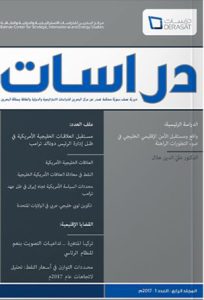
Derasat Journal 2017 – Issue 1
- The Derasat Journal aims to publish rigorous studies on issues related to the Arabian Gulf region, neighboring countries, the Middle East, and the world, particularly with regard to security and defense, economics and energy, from a comprehensive strategic perspective.
- To establish an intellectual dialogue among researchers from the Arabian Gulf region and beyond concerning current challenges and ways to address them.
- To enrich knowledge regarding the Arabian Gulf region and issues of regional and global security.
- Submitted studies must demonstrate originality and provide the journal with “added value,” away from repeating traditional topics, particularly in light of the rapid developments taking place in the region and the world.
- Studies submitted for publication should be relevant to issues concerning the Kingdom of Bahrain and the Gulf states, in addition to regional and international issues that have implications for the Gulf region.
- Submitted studies must maintain objectivity and avoid offending individuals, states, religions, or cultures.
- Studies submitted for publication must not have been previously published elsewhere, whether in print or electronically. The journal retains all intellectual property rights. Therefore, the contributor’s receipt of these conditions along with the assignment email implicitly signifies acceptance of them, and accordingly, the author may not republish material published in the journal elsewhere by any print or electronic means.
- Studies submitted for publication must adhere to recognized academic standards, whether regarding scientific methodology or citation and referencing. The journal follows the Chicago style for references and accepts submissions in both Arabic and English.
- The length of studies submitted for publication should range between 6,000–7,000 words, while book reviews and strategic report reviews should range between 1,500–2,000 words.
The themes of each issue of the journal are announced on the journal’s website at the Bahrain Center for Strategic, International and Energy Studies (DERASAT), inviting submissions related to those themes. Proposals for study ideas are received and discussed by the journal’s Editorial Board, after which the contributor is informed of the Board’s decision. In addition, the Editor-in-Chief may commission certain researchers to prepare studies in line with the journal’s work plan.
- No studies are published in the journal unless approved by the Peer-Review Committee (consisting of two reviewers), which has the authority to accept, reject, or request revisions from the author. The Editor-in-Chief informs the author of the reviewers’ final decision.
- Peer review is conducted by submitting the study without reference to the author’s name, accompanied by the peer-review form published on the journal’s website at the Derasat Center. The form includes four academic criteria: relevance and scope, originality and contribution, theoretical and analytical dimensions, and structure and clarity, in addition to any further comments the reviewer may wish to provide.
- A diverse list of reviewers from various specializations is selected in accordance with the objectives of the journal and the nature of the studies published therein.
Editor-in-Chief
- H.E. Dr. Shaikh Abdulla bin Ahmed bin Abdulla Al Khalifa
Chairman of the Board of Trustees Bahrain Center for Strategic, International and Energy Studies (Derasat) Kingdom of Bahrain
Managing Editor
- Dr. Ashraf Mohammed Keshk
Director of the International and Strategic Studies Program Bahrain Center for Strategic, International and Energy Studies (DERASAT) Kingdom of Bahrain
Dr. Ashraf Mohamed Keshk is a Senior Strategic Studies Expert specializing in Gulf and regional security, with more than three decades of research and academic experience. He received his PhD in Political Science from Cairo University in 2009, with a dissertation on the development of Gulf regional security since 2003: Study on the Impact of NATO Strategy,, which was awarded Best PhD Thesis. In the same year, he obtained a Diploma in Defense Studies from the NATO Defense College in Rome.
He has worked at the Bahrain Center for Strategic, International and Energy Studies (Derasat) since 2012 and currently serves as Director of the Program of Strategic and International Studies. His expertise focuses on Gulf security, defense policies, maritime security, and crisis management. He also served as an Academic Mentor and Lecturer at the NATO Defense College from 2009 to 2018 and has participated extensively in international academic, training, and conference activities.
Dr. Keshk has published extensively on Gulf and regional security. His major books include The Development of Gulf Regional Security since 2003: Study on the Impact of NATO Strategy,, Western Policies Toward the Security of the Arabian Gulf, NATO and the Gulf Countries (Springer, 2021), Maritime Security of the Arab Gulf States (Springer, 2022), and Security and Defense Policies of the Arabian Gulf Countries (2024). He also co-edited Gulf Cooperation Council Achievements and Challenges in 2025.
Associate Editors
- Omar Al-Ubaydli
Studies and Research Director
Bahrain Center for Strategic, International and Energy Studies (DERASAT), Bahrain
- Dr. Abdullah Al-Abbasi
Director of the Energy and Environment Program
Bahrain Center for Strategic, International and Energy Studies (DERASAT), Bahrain
Members
- Dr. Christian Koch
Executive Manager, Gulf Research Center Foundation Brussels and Director of Research
Gulf Research Center Kingdom of Belgium/ Kingdom of Saudi Arabia
- Dr. Osamah Alsayeghi
Research Scientist
Kuwait Institute for Scientific Research (KISR) Nonresident Scholar, Rice University’s Baker Institute for Public Policy State of Kuwait
- Dr. Moataz Salama
Director, Arabian Gulf Program and Head of the Arab and Regional Studies Unit
Al-Ahram Center for Political and Strategic Studies Arab Republic of Egypt
- Dr. Athraa Sayed Abbas Al-Mosawi
Dean of Graduate Studies & Scientific Research, University of Bahrain
Member of the Board of Trustees, Bahrain Center for Strategic, International and Energy Studies (Derasat) Kingdom of Bahrain
The Derasat Journal is a biannual journal in the Arabic language, that comprises studies and reports on a variety of topics and across a broad spectrum of research fields, including geopolitics, strategic security, international and energy studies with a focus on issues relevant to the Arabian Gulf. This issue focuses on a number of topics related to Gulf regional security in the light of current developments and Gulf-American relations.
A Changing Turkey: The Implications of the “Yes” Vote for the Presidential System
Determinants of American Policy toward Iran under the Trump Administration: Between Continuity and Change
This study examines the nature of the relationship between the administration of U.S. President Donald Trump and Iran, and its implications for the Gulf region in light of the transformations in American foreign policy following Trump’s arrival at the White House in 2017. The study argues that Trump represented an unconventional phenomenon in U.S. politics, adopting a hardline stance toward Iran, particularly regarding the nuclear agreement, which he described as “the worst deal in history,” claiming that it provided Iran with greater political and economic leverage to continue its regional policies.
The study analyzes the Trump administration’s policies and measures toward Iran, including the imposition of new economic sanctions, the tough approach toward Iran’s missile program, and the designation of Iran as a state sponsor of terrorism, in addition to the appointment of American officials known for their strong anti-Iran positions within the administration. The study also examines the impact of these policies on U.S.-Gulf relations, especially after the period of tension and mistrust that characterized those relations during the Barack Obama administration due to the nuclear agreement and American policies toward regional crises.
The study highlights Trump’s 2017 visit to Saudi Arabia as a turning point that established a new U.S.-Gulf partnership focused on confronting Iranian threats and strengthening political and security cooperation. It further discusses Iran’s response to the Trump administration and Tehran’s efforts to reduce the impact of U.S. policies by strengthening relations with international powers such as Russia, China, and Europe.
The study concludes that the future of U.S.-Iran relations remained highly uncertain due to divisions within American decision-making institutions, regional and international complexities, and ongoing disputes over Iran’s nuclear program and regional role in the Middle East.
The study analyzes the Trump administration’s policies and measures toward Iran, including the imposition of new economic sanctions, the tough approach toward Iran’s missile program, and the designation of Iran as a state sponsor of terrorism, in addition to the appointment of American officials known for their strong anti-Iran positions within the administration. The study also examines the impact of these policies on U.S.-Gulf relations, especially after the period of tension and mistrust that characterized those relations during the Barack Obama administration due to the nuclear agreement and American policies toward regional crises.
The study highlights Trump’s 2017 visit to Saudi Arabia as a turning point that established a new U.S.-Gulf partnership focused on confronting Iranian threats and strengthening political and security cooperation. It further discusses Iran’s response to the Trump administration and Tehran’s efforts to reduce the impact of U.S. policies by strengthening relations with international powers such as Russia, China, and Europe.
The study concludes that the future of U.S.-Iran relations remained highly uncertain due to divisions within American decision-making institutions, regional and international complexities, and ongoing disputes over Iran’s nuclear program and regional role in the Middle East.
Determinants of Balance in Oil Prices: An Analysis of the Trends of 2017
Oil markets have historically been characterized by volatility and imbalance. This is largely due to the inelastic nature of oil demand in response to price fluctuations, particularly because oil remains difficult to replace in sectors such as transportation and petrochemicals. In addition, oil producers have frequently contributed to either supply surpluses or shortages as a result of investment behavior, leading to severe cycles in oil prices.
Oil-producing countries have traditionally relied on OPEC to stabilize markets through adjusting oil supply in order to support prices. However, in 2014, OPEC refused to sacrifice its market share due to concerns regarding the rapid growth of shale oil production, which contributed to the oil price crisis. Consequently, in 2016 OPEC resumed efforts to stabilize prices in cooperation with Russia and other non-OPEC producers.
The commitment of OPEC members to the agreement helped prevent oil prices from falling below $50 per barrel at the beginning of 2017. Nevertheless, the agreement did not fully succeed in reducing excess supply and oil inventories, as American shale oil producers increased production by improving efficiency and reducing the breakeven price from $79 per barrel in 2014 to nearly $50 in early 2017.
The study expects the agreement to be extended through the end of 2017 and warns that failure to renew it could reverse previous gains and push oil prices down to nearly $40 per barrel.
Oil-producing countries have traditionally relied on OPEC to stabilize markets through adjusting oil supply in order to support prices. However, in 2014, OPEC refused to sacrifice its market share due to concerns regarding the rapid growth of shale oil production, which contributed to the oil price crisis. Consequently, in 2016 OPEC resumed efforts to stabilize prices in cooperation with Russia and other non-OPEC producers.
The commitment of OPEC members to the agreement helped prevent oil prices from falling below $50 per barrel at the beginning of 2017. Nevertheless, the agreement did not fully succeed in reducing excess supply and oil inventories, as American shale oil producers increased production by improving efficiency and reducing the breakeven price from $79 per barrel in 2014 to nearly $50 in early 2017.
The study expects the agreement to be extended through the end of 2017 and warns that failure to renew it could reverse previous gains and push oil prices down to nearly $40 per barrel.
Forming a Gulf-Arab Lobby in the United States: Requirements and Available Opportunities
This report seeks to highlight the concept of lobbying, which, although relatively unfamiliar in Arab political literature, constitutes an integral part of the American political system. In the United States, groups of citizens have the right to organize themselves in associations to advocate changes in public policy. Lobbying requires several essential components, including organization and unity of purpose.
In the field of foreign policy, pressure groups have played an influential role, particularly the Israeli lobby, which has succeeded in maintaining American support for Israel regardless of its strategic importance, as well as the Iranian lobby, which contributed significantly to promoting the Iranian nuclear agreement between Iran and the P5+1 countries in July 2015.
The study examines the concept of lobbying, the mechanisms and regulations governing lobbying activities, and the major lobbying groups influencing American policy toward the Middle East. It also analyzes the challenges facing Gulf interests during the Trump administration and the future prospects of Gulf-American relations, while exploring the possibility of establishing a Gulf-Arab lobby to preserve Gulf and Arab interests within the United States.
The report concludes by raising a central question: despite the existence of significant Arab and Gulf interests in the United States, how can an effective Gulf-Arab lobby be established within the American political arena?
In the field of foreign policy, pressure groups have played an influential role, particularly the Israeli lobby, which has succeeded in maintaining American support for Israel regardless of its strategic importance, as well as the Iranian lobby, which contributed significantly to promoting the Iranian nuclear agreement between Iran and the P5+1 countries in July 2015.
The study examines the concept of lobbying, the mechanisms and regulations governing lobbying activities, and the major lobbying groups influencing American policy toward the Middle East. It also analyzes the challenges facing Gulf interests during the Trump administration and the future prospects of Gulf-American relations, while exploring the possibility of establishing a Gulf-Arab lobby to preserve Gulf and Arab interests within the United States.
The report concludes by raising a central question: despite the existence of significant Arab and Gulf interests in the United States, how can an effective Gulf-Arab lobby be established within the American political arena?
Gulf-American Relations: The Experience of the Past, the Developments of the Present, and Future Prospects
The Gulf region acquires great importance for the United States for several reasons, whether due to its strategic location, which represents a meeting point for strategic maritime passages, in addition to its oil importance—despite what has been called the “shale oil revolution.” This importance has been reflected in all the principles and policies announced by successive American administrations from 1947 until 2016.
The Gulf Cooperation Council states and the United States are linked by several interests at the military, political, and economic levels. Despite the existence of some aspects of divergence in the visions of both sides regarding regional challenges, especially what appeared during the second presidential term of former American President Barack Obama, tension between the two sides will not reach the level of confrontation in light of the strategic interests between them.
The study also argues that the disagreements between them are not related to bilateral issues, in addition to the fact that the Gulf states represent an important regional partner for the United States in confronting terrorism, alongside several positive indicators launched by the new American administration upon which future relations may be built.
The Gulf Cooperation Council states and the United States are linked by several interests at the military, political, and economic levels. Despite the existence of some aspects of divergence in the visions of both sides regarding regional challenges, especially what appeared during the second presidential term of former American President Barack Obama, tension between the two sides will not reach the level of confrontation in light of the strategic interests between them.
The study also argues that the disagreements between them are not related to bilateral issues, in addition to the fact that the Gulf states represent an important regional partner for the United States in confronting terrorism, alongside several positive indicators launched by the new American administration upon which future relations may be built.
Oil in the Equation of Gulf-American Relations: Can the United States Dispense with Gulf Oil?
Attempts by the United States to achieve energy independence, particularly by reducing reliance on Gulf oil, have represented a continuous strategic objective since the 1970s. In this context, the shale oil revolution emerged as one of the most significant efforts to achieve this goal, especially amid increasing discussions regarding the ability of the United States to attain energy self-sufficiency. The study addresses two central questions: Can the United States dispense with Gulf oil? And what is the position of oil within the strategic relations between the United States and the Gulf Arab states?
The study concludes that although the United States has achieved a degree of relative energy independence during certain periods, this does not imply complete independence from Gulf oil, as the Gulf region remains a principal source of global energy supplies. Moreover, considerable uncertainty still surrounds the future of American shale oil production. The study argues that oil in general, and Gulf oil in particular, continues to retain strategic importance for both the United States and the global economy despite fluctuations in oil prices in recent years.
The study further emphasizes that political factors tend to have a greater influence on oil prices in the short term, whereas supply and demand dynamics shape prices over the long term. At the same time, challenges related to oil price volatility and regional instability require the Gulf states to accelerate efforts toward economic diversification and reducing dependence on oil revenues, as reflected in initiatives such as Saudi Vision 2030. The study concludes by stressing the pivotal role of the Gulf states in maintaining global energy market stability and the continued difficulty of replacing Gulf oil in the foreseeable future.
The study concludes that although the United States has achieved a degree of relative energy independence during certain periods, this does not imply complete independence from Gulf oil, as the Gulf region remains a principal source of global energy supplies. Moreover, considerable uncertainty still surrounds the future of American shale oil production. The study argues that oil in general, and Gulf oil in particular, continues to retain strategic importance for both the United States and the global economy despite fluctuations in oil prices in recent years.
The study further emphasizes that political factors tend to have a greater influence on oil prices in the short term, whereas supply and demand dynamics shape prices over the long term. At the same time, challenges related to oil price volatility and regional instability require the Gulf states to accelerate efforts toward economic diversification and reducing dependence on oil revenues, as reflected in initiatives such as Saudi Vision 2030. The study concludes by stressing the pivotal role of the Gulf states in maintaining global energy market stability and the continued difficulty of replacing Gulf oil in the foreseeable future.
The Present and Future of Gulf Regional Security in Light of Current Developments
This study examines the major transformations affecting the strategic environment of Gulf regional security between 2011 and 2016, including the wave of political upheavals across the Arab region, the growing number of fragile and failed states, the spread of religious extremism, violence, and terrorism, the sharp decline in oil prices, and the Iranian nuclear agreement.
The paper analyzes the current state of regional security through three main dimensions. The first concerns the challenges of managing relations with the American ally, highlighting the decline in trust between the GCC states and the United States during President Obama’s second term and the subsequent shifts that emerged under President Donald Trump. The second dimension addresses the limits of intervention in Arab internal conflicts and the implications of the Syrian and Yemeni crises. The third examines relations with the principal non-Arab regional powers—Iran, Türkiye, and Israel—by analyzing their objectives and patterns of cooperation, competition, and conflict.
The study also reviews American think tank perspectives on the future of Gulf security, ranging from proposals for an inclusive regional security framework involving all Gulf states and major powers, to conflict-oriented visions advocating the exclusion of Iran through the establishment of an “Arab NATO.”
The study concludes that the GCC states possess significant deterrent capabilities and the capacity to maintain strategic security, although this security balance still depends heavily on external powers due to ongoing regional and international instability. It further proposes strengthening Gulf security through enhancing self-defense capabilities, expanding coordination among GCC states, building Arab and regional alliances, and addressing internal and non-military sources of insecurity.
The paper analyzes the current state of regional security through three main dimensions. The first concerns the challenges of managing relations with the American ally, highlighting the decline in trust between the GCC states and the United States during President Obama’s second term and the subsequent shifts that emerged under President Donald Trump. The second dimension addresses the limits of intervention in Arab internal conflicts and the implications of the Syrian and Yemeni crises. The third examines relations with the principal non-Arab regional powers—Iran, Türkiye, and Israel—by analyzing their objectives and patterns of cooperation, competition, and conflict.
The study also reviews American think tank perspectives on the future of Gulf security, ranging from proposals for an inclusive regional security framework involving all Gulf states and major powers, to conflict-oriented visions advocating the exclusion of Iran through the establishment of an “Arab NATO.”
The study concludes that the GCC states possess significant deterrent capabilities and the capacity to maintain strategic security, although this security balance still depends heavily on external powers due to ongoing regional and international instability. It further proposes strengthening Gulf security through enhancing self-defense capabilities, expanding coordination among GCC states, building Arab and regional alliances, and addressing internal and non-military sources of insecurity.

