

This study aims to analyze the dimensions of Arab Gulf relations with the Association of Southeast Asian Nations (ASEAN) in political, economic, and security aspects. Both sides have experience in regional integration, and they have faced the challenges of the COVID-19 pandemic. Additionally, they are seeking to enhance trade amidst the interlocking interests of different global nations. While bilateral relations between the two sides have evolved significantly, there are promising indicators suggesting the potential for future development of these relations between the two blocs.
The study has three significant conclusions:
First: There are three important pillars that can be relied upon for the development of collective relations between the Arab Gulf countries and ASEAN. (1) Both organizations share ambitious economic visions, resulting in a common interest in enhancing cooperation in economic domains. (2) The Arab Gulf states can benefit from ASEAN's experience in establishing a regional forum and promoting a free trade area. (3) Both blocs have shown commitment to respecting the principles of the United Nations and their implementation.
Second: Despite the significance of political and economic progress in the relations between the two sides, there are incentives for further development. These include shared strategic interests, cultural and societal factors that make ASEAN peoples relatively closer to Arab Gulf countries, the attractiveness of ASEAN's rise, and mutual benefits. Moreover, utilizing the historical, political, and commercial ties between the Arab Gulf states and ASEAN can be an effective means of strengthening cooperation in counterterrorism efforts.
Third: Several challenges continue to impede the development of relations between the Arab Gulf states and ASEAN. Bilateral cooperation often prevails over collective action, which may reflect the lack of a unified ASEAN policy towards Gulf issues. Economic, trade, and investment relations tend to overshadow security concerns, despite the intertwining security challenges. Additionally, disputes between ASEAN and its neighboring regions may cast shadows on cooperation with the Gulf Cooperation Council (GCC) states.
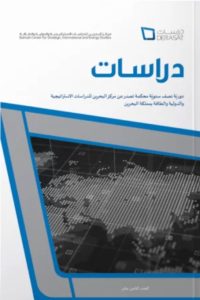
Derasat Journal 2023 – Issue 1
- The Derasat Journal aims to publish rigorous studies on issues related to the Arabian Gulf region, neighboring countries, the Middle East, and the world, particularly with regard to security and defense, economics and energy, from a comprehensive strategic perspective.
- To establish an intellectual dialogue among researchers from the Arabian Gulf region and beyond concerning current challenges and ways to address them.
- To enrich knowledge regarding the Arabian Gulf region and issues of regional and global security.
- Submitted studies must demonstrate originality and provide the journal with “added value,” away from repeating traditional topics, particularly in light of the rapid developments taking place in the region and the world.
- Studies submitted for publication should be relevant to issues concerning the Kingdom of Bahrain and the Gulf states, in addition to regional and international issues that have implications for the Gulf region.
- Submitted studies must maintain objectivity and avoid offending individuals, states, religions, or cultures.
- Studies submitted for publication must not have been previously published elsewhere, whether in print or electronically. The journal retains all intellectual property rights. Therefore, the contributor’s receipt of these conditions along with the assignment email implicitly signifies acceptance of them, and accordingly, the author may not republish material published in the journal elsewhere by any print or electronic means.
- Studies submitted for publication must adhere to recognized academic standards, whether regarding scientific methodology or citation and referencing. The journal follows the Chicago style for references and accepts submissions in both Arabic and English.
- The length of studies submitted for publication should range between 6,000–7,000 words, while book reviews and strategic report reviews should range between 1,500–2,000 words.
The themes of each issue of the journal are announced on the journal’s website at the Bahrain Center for Strategic, International and Energy Studies (DERASAT), inviting submissions related to those themes. Proposals for study ideas are received and discussed by the journal’s Editorial Board, after which the contributor is informed of the Board’s decision. In addition, the Editor-in-Chief may commission certain researchers to prepare studies in line with the journal’s work plan.
- No studies are published in the journal unless approved by the Peer-Review Committee (consisting of two reviewers), which has the authority to accept, reject, or request revisions from the author. The Editor-in-Chief informs the author of the reviewers’ final decision.
- Peer review is conducted by submitting the study without reference to the author’s name, accompanied by the peer-review form published on the journal’s website at the Derasat Center. The form includes four academic criteria: relevance and scope, originality and contribution, theoretical and analytical dimensions, and structure and clarity, in addition to any further comments the reviewer may wish to provide.
- A diverse list of reviewers from various specializations is selected in accordance with the objectives of the journal and the nature of the studies published therein.
Editor-in-Chief
- H.E. Dr. Shaikh Abdulla bin Ahmed bin Abdulla Al Khalifa
Chairman of the Board of Trustees Bahrain Center for Strategic, International and Energy Studies (Derasat) Kingdom of Bahrain
Managing Editor
- Dr. Ashraf Mohammed Keshk
Director of the International and Strategic Studies Program Bahrain Center for Strategic, International and Energy Studies (DERASAT) Kingdom of Bahrain
Dr. Ashraf Mohamed Keshk is a Senior Strategic Studies Expert specializing in Gulf and regional security, with more than three decades of research and academic experience. He received his PhD in Political Science from Cairo University in 2009, with a dissertation on the development of Gulf regional security since 2003: Study on the Impact of NATO Strategy,, which was awarded Best PhD Thesis. In the same year, he obtained a Diploma in Defense Studies from the NATO Defense College in Rome.
He has worked at the Bahrain Center for Strategic, International and Energy Studies (Derasat) since 2012 and currently serves as Director of the Program of Strategic and International Studies. His expertise focuses on Gulf security, defense policies, maritime security, and crisis management. He also served as an Academic Mentor and Lecturer at the NATO Defense College from 2009 to 2018 and has participated extensively in international academic, training, and conference activities.
Dr. Keshk has published extensively on Gulf and regional security. His major books include The Development of Gulf Regional Security since 2003: Study on the Impact of NATO Strategy,, Western Policies Toward the Security of the Arabian Gulf, NATO and the Gulf Countries (Springer, 2021), Maritime Security of the Arab Gulf States (Springer, 2022), and Security and Defense Policies of the Arabian Gulf Countries (2024). He also co-edited Gulf Cooperation Council Achievements and Challenges in 2025.
Associate Editors
- Omar Al-Ubaydli
Studies and Research Director
Bahrain Center for Strategic, International and Energy Studies (DERASAT), Bahrain
- Dr. Abdullah Al-Abbasi
Director of the Energy and Environment Program
Bahrain Center for Strategic, International and Energy Studies (DERASAT), Bahrain
Members
- Dr. Christian Koch
Executive Manager, Gulf Research Center Foundation Brussels and Director of Research
Gulf Research Center Kingdom of Belgium/ Kingdom of Saudi Arabia
- Dr. Osamah Alsayeghi
Research Scientist
Kuwait Institute for Scientific Research (KISR) Nonresident Scholar, Rice University’s Baker Institute for Public Policy State of Kuwait
- Dr. Moataz Salama
Director, Arabian Gulf Program and Head of the Arab and Regional Studies Unit
Al-Ahram Center for Political and Strategic Studies Arab Republic of Egypt
- Dr. Athraa Sayed Abbas Al-Mosawi
Dean of Graduate Studies & Scientific Research, University of Bahrain
Member of the Board of Trustees, Bahrain Center for Strategic, International and Energy Studies (Derasat) Kingdom of Bahrain
The Bahrain Center for Strategic, International and Energy Studies (Derasat) published a new issue of Derasat Journal, its biannual peer-reviewed scientific journal, which examined several political, economic, and security issues from a strategic perspective.
Dimensions of the Arab Gulf States’ Relations with the Association of Southeast Asian Nations (ASEAN)
Enhancing Cooperation between the Arabian Gulf and ASEAN Countries on Achieving Net Zero Emissions
This study aims to analyze the experiences of the Gulf Cooperation Council (GCC) countries and the ASEAN countries in mitigating the phenomenon of global warming in accordance with international commitments. Both sides have already joined the United Nations Framework Convention on Climate Change (UNFCCC) and have implemented numerous policies and plans aimed at achieving this goal. Despite these efforts, there are still obstacles, and the study has arrived at three key findings:
Firstly, the Arabian Gulf countries have already taken many steps to reduce carbon emissions even before officially committing to international obligations. This is evident in the Arabian Gulf countries' plans, driven by their financial capabilities and resources.
Secondly, in Southeast Asia, with its increasing population and growth rates, it ranks as one of the world's top energy consumers. Nevertheless, these countries have committed to achieving net zero carbon emissions through various policies, including advancements in renewable energy, carbon taxes, the shift towards green hydrogen, and carbon capture and storage projects.
Thirdly, in light of the efforts made by both the Arabian Gulf and ASEAN countries to reduce carbon emissions, and despite the obstacles both sides face, they have opportunities for cooperation. These opportunities include carbon capture and storage technologies, promoting carbon markets, focusing on green hydrogen, and sharing expertise in research and innovation to achieve their goals. Both sides are keen on enhancing various forms of collaboration between them.
Firstly, the Arabian Gulf countries have already taken many steps to reduce carbon emissions even before officially committing to international obligations. This is evident in the Arabian Gulf countries' plans, driven by their financial capabilities and resources.
Secondly, in Southeast Asia, with its increasing population and growth rates, it ranks as one of the world's top energy consumers. Nevertheless, these countries have committed to achieving net zero carbon emissions through various policies, including advancements in renewable energy, carbon taxes, the shift towards green hydrogen, and carbon capture and storage projects.
Thirdly, in light of the efforts made by both the Arabian Gulf and ASEAN countries to reduce carbon emissions, and despite the obstacles both sides face, they have opportunities for cooperation. These opportunities include carbon capture and storage technologies, promoting carbon markets, focusing on green hydrogen, and sharing expertise in research and innovation to achieve their goals. Both sides are keen on enhancing various forms of collaboration between them.
Food Security Policies of the Arabian Gulf States and the Association of Southeast Asian Nations (ASEAN)
This study aims to analyze cooperation between the Arabian Gulf states and the Association of Southeast Asian Nations (ASEAN) in the field of food security. Given the numerous common factors between the two sides, this represents a foundation for significant collaboration in the field of food security. This is especially relevant as both sides are keen on developing their overall economic relations.
The study has three significant conclusions:
First: Food security poses a significant challenge for both the Arab Guld states and ASEAN. The Arabian Gulf states face water scarcity and a shortage of arable land, and an increase of global food prices, which have risen at a faster rate than oil prices. This is particularly concerning as Arabian Gulf states depend on imports to cover 85% of their food needs. ASEAN countries, on the other hand, experience food security crises with economic, social, and environmental dimensions. Like the Arab Gulf states, ASEAN was also impacted by the COVID-19 crisis, which has affected supply chains.
Second: Arabian Gulf states and ASEAN can exchange experiences and expertise in achieving food security. Arabian Gulf states have implemented several relevant regulations and conducted joint research. Additionally, Kuwait proposed the establishment of a Gulf Food Security Network within the Gulf Cooperation Council in April 2020. ASEAN also has significant experiences, including integrated food security strategies and the Strategic Plan for Food Security 2015-2020, along with the ASEAN Food Security Information System and other initiatives.
Third: Several proposals can activate cooperation between Arabian Gulf states and ASEAN in the field of food security. These include increasing trade exchange, including food exports, knowledge transfer, and technology sharing. Additionally, there is potential for collaboration in agricultural research, increasing Arabian Gulf investments in agricultural production in ASEAN countries, and achieving regional integration.
The study has three significant conclusions:
First: Food security poses a significant challenge for both the Arab Guld states and ASEAN. The Arabian Gulf states face water scarcity and a shortage of arable land, and an increase of global food prices, which have risen at a faster rate than oil prices. This is particularly concerning as Arabian Gulf states depend on imports to cover 85% of their food needs. ASEAN countries, on the other hand, experience food security crises with economic, social, and environmental dimensions. Like the Arab Gulf states, ASEAN was also impacted by the COVID-19 crisis, which has affected supply chains.
Second: Arabian Gulf states and ASEAN can exchange experiences and expertise in achieving food security. Arabian Gulf states have implemented several relevant regulations and conducted joint research. Additionally, Kuwait proposed the establishment of a Gulf Food Security Network within the Gulf Cooperation Council in April 2020. ASEAN also has significant experiences, including integrated food security strategies and the Strategic Plan for Food Security 2015-2020, along with the ASEAN Food Security Information System and other initiatives.
Third: Several proposals can activate cooperation between Arabian Gulf states and ASEAN in the field of food security. These include increasing trade exchange, including food exports, knowledge transfer, and technology sharing. Additionally, there is potential for collaboration in agricultural research, increasing Arabian Gulf investments in agricultural production in ASEAN countries, and achieving regional integration.
French Strategy in the Arabian Gulf: Evaluation and Future Prospects
This study aims to analyze the French strategy regarding Arabian Gulf security, within the broader context of France's defense strategy towards vital regions where France has significant interests. Despite France's efforts to develop partnerships with regions and countries where it has important relations and interests, the success of such partnerships depends not only on the willingness of both parties but also on the available opportunities for developing those relations. This is especially true in the face of competition from other major powers in the same regions, in addition to France's priorities as reflected in its military plans which is closely tied to capabilities at the same time.
The study has three significant conclusions:
First: Given the increasing strategic importance of the Arabian Gulf region, France has reevaluated its means of influence in the region. France's influence primarily relies on its military base presence in the United Arab Emirates since 2009, and France is working to provide additional security guarantees that complement the U.S. role without contradicting it.
Second: The protection of maritime navigation plays a significant role in France's contribution to Arabian Gulf security. This role is rooted in France's experience in contributing to the tanker war during the Iran-Iraq war, as well as its participation in the liberation of Kuwait in 1991. The successive defense strategies emphasize the importance of the Gulf region to France.
Third: France is convinced that the military aspect of national security strategies must be developed, including the capacity for intervention and defining areas of strategic interest. Among these areas is the Indian Ocean-Pacific region, which includes global trade routes and hosts approximately 7,000 French military personnel. Given the interconnectedness between this region and Arabian Gulf security, the 2022 strategic review called for greater attention to Arabian Gulf security. This includes new areas such as counterterrorism, information sharing, and the enhancement of arms exports.
The study has three significant conclusions:
First: Given the increasing strategic importance of the Arabian Gulf region, France has reevaluated its means of influence in the region. France's influence primarily relies on its military base presence in the United Arab Emirates since 2009, and France is working to provide additional security guarantees that complement the U.S. role without contradicting it.
Second: The protection of maritime navigation plays a significant role in France's contribution to Arabian Gulf security. This role is rooted in France's experience in contributing to the tanker war during the Iran-Iraq war, as well as its participation in the liberation of Kuwait in 1991. The successive defense strategies emphasize the importance of the Gulf region to France.
Third: France is convinced that the military aspect of national security strategies must be developed, including the capacity for intervention and defining areas of strategic interest. Among these areas is the Indian Ocean-Pacific region, which includes global trade routes and hosts approximately 7,000 French military personnel. Given the interconnectedness between this region and Arabian Gulf security, the 2022 strategic review called for greater attention to Arabian Gulf security. This includes new areas such as counterterrorism, information sharing, and the enhancement of arms exports.
Integration of Bahrain’s Political System with Sustainable Development Goals
This study aims to conduct a comparative analysis of the seventeen Sustainable Development Goals (SDGs) announced by the United Nations in 2015, which serve as a guiding framework for all countries worldwide in their pursuit of sustainable development. In the face of the rapid changes occurring on political, economic, and technological fronts globally, there are both opportunities and challenges for nations. This raises questions about priorities and the necessary timeframes for achieving these goals, which may not necessarily be the same for all countries. However, some countries, including the Kingdom of Bahrain, have managed to align these goals with their political system, as evidenced by the laws and practices on political, economic, and social fronts.
The study has three significant conclusions:
First: Through an analysis of the political reform path in Bahrain, encompassing both institutions and legislations enacted since His Majesty King Hamad bin Isa Al Khalifa ascended the throne in 1999, it becomes evident that they reflect the principles and goals of sustainable development. This alignment places the citizen as both the objective and means to achieve prosperity and well-being for all.
Second: Despite the adoption of the Sustainable Development Goals in 2015 and their activation in 2016, Bahrain's political reform trajectory has been proactive in adhering to all international standards related to sustainable development. When compared to other nations, Bahrain stands out for its clear commitment to the goals and mechanisms of sustainable development.
Third: Bahrain's pursuit of Sustainable Development Goals has not only yielded economic benefits, such as attracting foreign investments and enhancing confidence in Bahrain's economy but has also bolstered its global reputation and international relations. These are evident in strategic partnerships with major powers and defense
The study has three significant conclusions:
First: Through an analysis of the political reform path in Bahrain, encompassing both institutions and legislations enacted since His Majesty King Hamad bin Isa Al Khalifa ascended the throne in 1999, it becomes evident that they reflect the principles and goals of sustainable development. This alignment places the citizen as both the objective and means to achieve prosperity and well-being for all.
Second: Despite the adoption of the Sustainable Development Goals in 2015 and their activation in 2016, Bahrain's political reform trajectory has been proactive in adhering to all international standards related to sustainable development. When compared to other nations, Bahrain stands out for its clear commitment to the goals and mechanisms of sustainable development.
Third: Bahrain's pursuit of Sustainable Development Goals has not only yielded economic benefits, such as attracting foreign investments and enhancing confidence in Bahrain's economy but has also bolstered its global reputation and international relations. These are evident in strategic partnerships with major powers and defense
The Regional Integration Experience of ASEAN and Lessons Learned for Southern Countries
This study examines the circumstances that led to the formation of the Association of Southeast Asian Nations (ASEAN) as a regional organization established during the Cold War era with the aim of advancing the interests of its member states. The organization began with the membership of five countries in the region in 1976 and has since grown to include ten countries. Despite the existence of numerous regional security organizations worldwide, ASEAN stands out with its unique approach known as the "ASEAN Way." ASEAN leads several important meetings and gatherings for its members, including the ASEAN Regional Forum, the East Asia Summit, and the ASEAN Defense Ministers' Meeting. The work of ASEAN is based on principles similar to those of the United Nations, including non- interference in internal affairs, respect for national sovereignty, and the prohibition of the use or threat of military force.
The study has three significant conclusions:
First: Despite the convergence of political, security, and economic factors that can explain the emergence of regional security organizations, the influence of external factors cannot be ignored. This poses a challenge to a group of states, especially smaller ones, as the preservation of regional power balance remains essential for their national security.
Second: While ASEAN has achieved important successes since its inception, it still faces several institutional challenges, such as the lack of mechanisms to enforce its decisions. Additionally, economic disparities among ASEAN member states pose economic challenges. Internal challenges, including disputes and border conflicts, also persist, as do external regional dynamics and shifts in the regional power balance, such as the South China Sea tensions.
Third: The ASEAN experience offers five valuable lessons for Southern countries: the difficulty of comparing various regional integration experiences, the flexibility of ASEAN's regional integration approach, the significance of external factors and the roles of major powers in the success of regional security experiments, the potential hindrance of economic disparities to integration, and the importance of family-owned businesses in economic development.
The study has three significant conclusions:
First: Despite the convergence of political, security, and economic factors that can explain the emergence of regional security organizations, the influence of external factors cannot be ignored. This poses a challenge to a group of states, especially smaller ones, as the preservation of regional power balance remains essential for their national security.
Second: While ASEAN has achieved important successes since its inception, it still faces several institutional challenges, such as the lack of mechanisms to enforce its decisions. Additionally, economic disparities among ASEAN member states pose economic challenges. Internal challenges, including disputes and border conflicts, also persist, as do external regional dynamics and shifts in the regional power balance, such as the South China Sea tensions.
Third: The ASEAN experience offers five valuable lessons for Southern countries: the difficulty of comparing various regional integration experiences, the flexibility of ASEAN's regional integration approach, the significance of external factors and the roles of major powers in the success of regional security experiments, the potential hindrance of economic disparities to integration, and the importance of family-owned businesses in economic development.
The Relationship between the Kingdom of Bahrain and ASEAN: A Model for Interregional Cooperation
This study seeks to analyze the implications and objectives of the relations between the Kingdom of Bahrain and the ASEAN states from the perspective of interregional relations. It includes an important theoretical framework concerning the concept of dialogue and interregional cooperation and the benefits they achieve for states in light of the overlap of interests resulting from globalization, as well as the possibility for states—especially small states—to achieve added value from such cooperation.
The study contains several elements, namely the history of the relationship between the Kingdom of Bahrain and the ASEAN states, followed by the implications of relations between Bahrain and ASEAN at the political and economic levels, in addition to proposals regarding security cooperation.
The study reached three conclusions:
The first: Bahrain’s relationship with the ASEAN states comes within the framework of diversifying its international partnerships, especially economic partnerships. On the other hand, a state obtaining a status within another organization does not necessarily require geographical proximity or even similarity in the nature of political systems. Rather, this may achieve numerous economic benefits for the state, in addition to benefiting from the security expertise of that organization. Dialogue between Bahrain and ASEAN achieves several gains at the economic level, including protection from economic competition and the achievement of sustainable development goals, in addition to granting the state diplomatic influence at the international level.
The second: despite the importance of the indicators reflecting the development of political relations between Bahrain and ASEAN, including the exchange of visits and the establishment of the Bahrain/ASEAN Council in 2017, which seeks to identify opportunities for trade and investment exchange between the two sides, the most significant development was the accession of the Kingdom of Bahrain to the Treaty of Amity and Cooperation in Southeast Asia in 2019. Several other Gulf states subsequently followed, contributing to the formulation of a unified Gulf orientation regarding maximizing the benefits of cooperation with the Association of Southeast Asian Nations states.
The third: despite the absence of direct areas of security cooperation between the Kingdom of Bahrain and the ASEAN states, there are two foundations upon which such cooperation may be built. The first is represented by the conviction among ASEAN states regarding the same principles adopted by the Kingdom of Bahrain and the Arabian Gulf states in their regional and foreign policies in general, namely respect for state sovereignty and non-interference in internal affairs. The second emerged during his speech before the seventeenth Manama Security Dialogue held in November 2021, when Dato’ Seri, the Malaysian Minister of Defence, stated that the ASEAN states were engaged in discussions regarding the establishment of a mechanism for joint cooperation among the armed forces of the ten ASEAN states and the possibility of expanding such cooperation to include the Arabian Gulf states.
The study contains several elements, namely the history of the relationship between the Kingdom of Bahrain and the ASEAN states, followed by the implications of relations between Bahrain and ASEAN at the political and economic levels, in addition to proposals regarding security cooperation.
The study reached three conclusions:
The first: Bahrain’s relationship with the ASEAN states comes within the framework of diversifying its international partnerships, especially economic partnerships. On the other hand, a state obtaining a status within another organization does not necessarily require geographical proximity or even similarity in the nature of political systems. Rather, this may achieve numerous economic benefits for the state, in addition to benefiting from the security expertise of that organization. Dialogue between Bahrain and ASEAN achieves several gains at the economic level, including protection from economic competition and the achievement of sustainable development goals, in addition to granting the state diplomatic influence at the international level.
The second: despite the importance of the indicators reflecting the development of political relations between Bahrain and ASEAN, including the exchange of visits and the establishment of the Bahrain/ASEAN Council in 2017, which seeks to identify opportunities for trade and investment exchange between the two sides, the most significant development was the accession of the Kingdom of Bahrain to the Treaty of Amity and Cooperation in Southeast Asia in 2019. Several other Gulf states subsequently followed, contributing to the formulation of a unified Gulf orientation regarding maximizing the benefits of cooperation with the Association of Southeast Asian Nations states.
The third: despite the absence of direct areas of security cooperation between the Kingdom of Bahrain and the ASEAN states, there are two foundations upon which such cooperation may be built. The first is represented by the conviction among ASEAN states regarding the same principles adopted by the Kingdom of Bahrain and the Arabian Gulf states in their regional and foreign policies in general, namely respect for state sovereignty and non-interference in internal affairs. The second emerged during his speech before the seventeenth Manama Security Dialogue held in November 2021, when Dato’ Seri, the Malaysian Minister of Defence, stated that the ASEAN states were engaged in discussions regarding the establishment of a mechanism for joint cooperation among the armed forces of the ten ASEAN states and the possibility of expanding such cooperation to include the Arabian Gulf states.

