

This study seeks to analyze the reality of Iraqi security and defense capabilities through four elements:
The first: the establishment and development of the Iraqi security and defense forces.
The second: the security and defense forces in 2014.
The third: plans for building security and defense forces in Iraq.
The fourth: challenges facing the building of Iraqi security and defense capabilities.
The study reached three principal conclusions:
The first: the obstacles to building the Iraqi security and defense forces are numerous, ranging from internal challenges represented by the absence of a military strategy compatible with the conditions, developments, and challenges in Iraq; the absence of a national military industry capable of supporting these forces; political disagreements affecting decision-making regarding support for these forces; in addition to financial challenges, the multiplicity of formations and leaderships; and external challenges represented by the regional and international conflict over Iraq.
The second: the year 2003 constituted a pivotal year in the history of the Iraqi security and defense forces, as the weakness of these forces led to border breaches, which enabled terrorist groups to infiltrate to and from Iraq into neighboring states.
The third: the lack of preparedness of the Iraqi security forces had a major impact on their inability to confront ISIS in 2014.
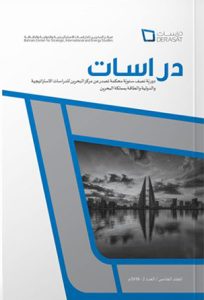
Derasat Journal 2018 – Issue 2
- The Derasat Journal aims to publish rigorous studies on issues related to the Arabian Gulf region, neighboring countries, the Middle East, and the world, particularly with regard to security and defense, economics and energy, from a comprehensive strategic perspective.
- To establish an intellectual dialogue among researchers from the Arabian Gulf region and beyond concerning current challenges and ways to address them.
- To enrich knowledge regarding the Arabian Gulf region and issues of regional and global security.
- Submitted studies must demonstrate originality and provide the journal with “added value,” away from repeating traditional topics, particularly in light of the rapid developments taking place in the region and the world.
- Studies submitted for publication should be relevant to issues concerning the Kingdom of Bahrain and the Gulf states, in addition to regional and international issues that have implications for the Gulf region.
- Submitted studies must maintain objectivity and avoid offending individuals, states, religions, or cultures.
- Studies submitted for publication must not have been previously published elsewhere, whether in print or electronically. The journal retains all intellectual property rights. Therefore, the contributor’s receipt of these conditions along with the assignment email implicitly signifies acceptance of them, and accordingly, the author may not republish material published in the journal elsewhere by any print or electronic means.
- Studies submitted for publication must adhere to recognized academic standards, whether regarding scientific methodology or citation and referencing. The journal follows the Chicago style for references and accepts submissions in both Arabic and English.
- The length of studies submitted for publication should range between 6,000–7,000 words, while book reviews and strategic report reviews should range between 1,500–2,000 words.
The themes of each issue of the journal are announced on the journal’s website at the Bahrain Center for Strategic, International and Energy Studies (DERASAT), inviting submissions related to those themes. Proposals for study ideas are received and discussed by the journal’s Editorial Board, after which the contributor is informed of the Board’s decision. In addition, the Editor-in-Chief may commission certain researchers to prepare studies in line with the journal’s work plan.
- No studies are published in the journal unless approved by the Peer-Review Committee (consisting of two reviewers), which has the authority to accept, reject, or request revisions from the author. The Editor-in-Chief informs the author of the reviewers’ final decision.
- Peer review is conducted by submitting the study without reference to the author’s name, accompanied by the peer-review form published on the journal’s website at the Derasat Center. The form includes four academic criteria: relevance and scope, originality and contribution, theoretical and analytical dimensions, and structure and clarity, in addition to any further comments the reviewer may wish to provide.
- A diverse list of reviewers from various specializations is selected in accordance with the objectives of the journal and the nature of the studies published therein.
Editor-in-Chief
- H.E. Dr. Shaikh Abdulla bin Ahmed bin Abdulla Al Khalifa
Chairman of the Board of Trustees Bahrain Center for Strategic, International and Energy Studies (Derasat) Kingdom of Bahrain
Managing Editor
- Dr. Ashraf Mohammed Keshk
Director of the International and Strategic Studies Program Bahrain Center for Strategic, International and Energy Studies (DERASAT) Kingdom of Bahrain
Dr. Ashraf Mohamed Keshk is a Senior Strategic Studies Expert specializing in Gulf and regional security, with more than three decades of research and academic experience. He received his PhD in Political Science from Cairo University in 2009, with a dissertation on the development of Gulf regional security since 2003: Study on the Impact of NATO Strategy,, which was awarded Best PhD Thesis. In the same year, he obtained a Diploma in Defense Studies from the NATO Defense College in Rome.
He has worked at the Bahrain Center for Strategic, International and Energy Studies (Derasat) since 2012 and currently serves as Director of the Program of Strategic and International Studies. His expertise focuses on Gulf security, defense policies, maritime security, and crisis management. He also served as an Academic Mentor and Lecturer at the NATO Defense College from 2009 to 2018 and has participated extensively in international academic, training, and conference activities.
Dr. Keshk has published extensively on Gulf and regional security. His major books include The Development of Gulf Regional Security since 2003: Study on the Impact of NATO Strategy,, Western Policies Toward the Security of the Arabian Gulf, NATO and the Gulf Countries (Springer, 2021), Maritime Security of the Arab Gulf States (Springer, 2022), and Security and Defense Policies of the Arabian Gulf Countries (2024). He also co-edited Gulf Cooperation Council Achievements and Challenges in 2025.
Associate Editors
- Omar Al-Ubaydli
Studies and Research Director
Bahrain Center for Strategic, International and Energy Studies (DERASAT), Bahrain
- Dr. Abdullah Al-Abbasi
Director of the Energy and Environment Program
Bahrain Center for Strategic, International and Energy Studies (DERASAT), Bahrain
Members
- Dr. Christian Koch
Executive Manager, Gulf Research Center Foundation Brussels and Director of Research
Gulf Research Center Kingdom of Belgium/ Kingdom of Saudi Arabia
- Dr. Osamah Alsayeghi
Research Scientist
Kuwait Institute for Scientific Research (KISR) Nonresident Scholar, Rice University’s Baker Institute for Public Policy State of Kuwait
- Dr. Moataz Salama
Director, Arabian Gulf Program and Head of the Arab and Regional Studies Unit
Al-Ahram Center for Political and Strategic Studies Arab Republic of Egypt
- Dr. Athraa Sayed Abbas Al-Mosawi
Dean of Graduate Studies & Scientific Research, University of Bahrain
Member of the Board of Trustees, Bahrain Center for Strategic, International and Energy Studies (Derasat) Kingdom of Bahrain
The second edition of the DERASAT Journal 2018 includes four main sections covering international security and trade, energy security, regional conflict and a final section with book reviews.
The first section includes two Studies analysing firstly the current ‘Balance of Power and the Impact on Regional Conflicts’ with a second study on the, “Impact of trade between the USA and Europe on Gulf State economies”. A second section focuses on International Energy Security Strategies that includes analyses on US energy security policy shifts, Europe and the pursuit of a multilateral energy system for the Middle East, NATO’s energy security strategy and a look at the risks on transit through the Straits of Hormuz and Bab al-Mandeb. A third section covers regional aspects with contributions on Iraqi security and defence capacities and the fourth section includes a number of recent and pertinent book reviews.
Building Iraqi Security and Defense Capabilities: Foundations and Challenges
Energy Security in the European Union and the Pursuit of a Multilateral Energy System in the Middle East and the Arabian Gulf
This study seeks to analyze the position of the issue of energy security within the interests of the European Union and the prospects for cooperation with the Gulf states through four elements:
First: activating European integration regarding the issue of energy security.
Second: the external dimension of energy security in the European Union and the geopolitics of energy at the global level.
Third: the European Union, the Middle East, and the Arabian Gulf: geopolitical challenges internally and externally.
The study reached three principal conclusions:
1. Despite the current challenges facing the energy sector, whether in the Arabian Gulf region or the Middle East in general, the European Union can identify two areas for cooperation in this field. The first is renewable energy, and the second is strengthening consultations with the principal actors in the field of energy, especially the United States, Russia, and China.
2. Threats to energy security during past decades led this issue to become a principal subject within the agenda of the European Union. In 2011, the European Commission presented a comprehensive plan for continuing the development of the Union’s external energy policy.
3. Relations between the European Union and the Arabian Gulf and Middle Eastern states are characterized by complexity in the field of energy cooperation because of the geopolitical challenges that constitute an obstacle to the role of the European Union in that region in general.
First: activating European integration regarding the issue of energy security.
Second: the external dimension of energy security in the European Union and the geopolitics of energy at the global level.
Third: the European Union, the Middle East, and the Arabian Gulf: geopolitical challenges internally and externally.
The study reached three principal conclusions:
1. Despite the current challenges facing the energy sector, whether in the Arabian Gulf region or the Middle East in general, the European Union can identify two areas for cooperation in this field. The first is renewable energy, and the second is strengthening consultations with the principal actors in the field of energy, especially the United States, Russia, and China.
2. Threats to energy security during past decades led this issue to become a principal subject within the agenda of the European Union. In 2011, the European Commission presented a comprehensive plan for continuing the development of the Union’s external energy policy.
3. Relations between the European Union and the Arabian Gulf and Middle Eastern states are characterized by complexity in the field of energy cooperation because of the geopolitical challenges that constitute an obstacle to the role of the European Union in that region in general.
Risks Threatening Energy Transit through the Straits of Hormuz and Bab el-Mandeb
This study seeks to identify the risks facing the passage of oil through the Strait of Hormuz and the Bab el-Mandeb Strait, as well as the options available to the Gulf states for confronting those risks, through three principal elements:
The first: identifying the principal vulnerabilities in energy supplies and their transit through the Strait of Hormuz and the Bab el-Mandeb Strait.
The second: studying the impact of a possible interruption of energy exports on the states of the Middle East.
The third: the expected response from the Gulf states and international powers toward such threats.
The study reached three principal conclusions:
1. Geopolitical uncertainty in the Middle East is increasing because of the chronic crises in the region resulting from Iranian interventions in these crises. Despite its threats, Iran will not close the Strait of Hormuz unless it faces an existential threat, such as engagement in a regional and American military conflict or an economic collapse that sanctions could cause.
2. The Bab el-Mandeb Strait constitutes a greater security threat to maritime transport compared to the Strait of Hormuz. The threat from the Houthi militias lies in the repeated attacks carried out by these militias not only against Gulf oil tankers, but also against certain American naval vessels, which prompted a response from them.
3. In light of the current and potential threats to existing oil transit routes, the Gulf states possess alternative routes for transporting oil, some of which have already been implemented in the Kingdom of Saudi Arabia, the United Arab Emirates, and the Sultanate of Oman.
The first: identifying the principal vulnerabilities in energy supplies and their transit through the Strait of Hormuz and the Bab el-Mandeb Strait.
The second: studying the impact of a possible interruption of energy exports on the states of the Middle East.
The third: the expected response from the Gulf states and international powers toward such threats.
The study reached three principal conclusions:
1. Geopolitical uncertainty in the Middle East is increasing because of the chronic crises in the region resulting from Iranian interventions in these crises. Despite its threats, Iran will not close the Strait of Hormuz unless it faces an existential threat, such as engagement in a regional and American military conflict or an economic collapse that sanctions could cause.
2. The Bab el-Mandeb Strait constitutes a greater security threat to maritime transport compared to the Strait of Hormuz. The threat from the Houthi militias lies in the repeated attacks carried out by these militias not only against Gulf oil tankers, but also against certain American naval vessels, which prompted a response from them.
3. In light of the current and potential threats to existing oil transit routes, the Gulf states possess alternative routes for transporting oil, some of which have already been implemented in the Kingdom of Saudi Arabia, the United Arab Emirates, and the Sultanate of Oman.
The Concept of Balance of Power and Its Implications for Conflicts in the Middle East
This study seeks to analyze the balances of power in the Middle East and their implications for Arab conflicts and crises through three main elements:
The first analyzes the state of the balance of power in the region, whether in terms of material power balances (military and economic) or in terms of balances of interests and the differing security priorities among the principal states of the region (Arab and non-Arab).
The second presents the operative characteristics of the overlap between regional alliances and the roles of international powers in the conflicts of the Middle East region.
The third section provides an analysis of the implications of regional and international balances of power on the crises of the Arab region, focusing on recent developments in the crises in Yemen, Syria, and Libya, in addition to an assessment of the proposal to establish the Middle East Strategic Alliance and its expected role by some Arab states in managing these crises.
The study reached three principal conclusions:
The first: despite the existence of agreements among the principal Arab powers regarding the risks and challenges facing the Arab region and the Gulf, there remains divergence in security priorities, which limits the existence of space for joint action to confront these challenges.
The second: what adds a state of complexity to the reality of the regional balance of power is the current state of international conflict and competition witnessed in the region, with the Syrian crisis presenting a clear example of this, in addition to the support provided by some regional powers to armed non-state groups that seek to undermine the entity of the unified national state.
The third: although divergence in security priorities and political interests negatively affects the possibility of joint regional action, economic and demographic factors have an influence no less important than those factors.
The first analyzes the state of the balance of power in the region, whether in terms of material power balances (military and economic) or in terms of balances of interests and the differing security priorities among the principal states of the region (Arab and non-Arab).
The second presents the operative characteristics of the overlap between regional alliances and the roles of international powers in the conflicts of the Middle East region.
The third section provides an analysis of the implications of regional and international balances of power on the crises of the Arab region, focusing on recent developments in the crises in Yemen, Syria, and Libya, in addition to an assessment of the proposal to establish the Middle East Strategic Alliance and its expected role by some Arab states in managing these crises.
The study reached three principal conclusions:
The first: despite the existence of agreements among the principal Arab powers regarding the risks and challenges facing the Arab region and the Gulf, there remains divergence in security priorities, which limits the existence of space for joint action to confront these challenges.
The second: what adds a state of complexity to the reality of the regional balance of power is the current state of international conflict and competition witnessed in the region, with the Syrian crisis presenting a clear example of this, in addition to the support provided by some regional powers to armed non-state groups that seek to undermine the entity of the unified national state.
The third: although divergence in security priorities and political interests negatively affects the possibility of joint regional action, economic and demographic factors have an influence no less important than those factors.
The Impact of Trade Disputes between the United States and Its European Partners on the Economies of the Gulf States
This study seeks to examine the impact of trade disputes between the United States and its European partners on the economies of the Gulf states through four elements:
The first element: the history and substance of American-European trade disputes.
The second element: the future of the trade war between the United States and the European states.
The third element: the reality of the economies of the Gulf states.
The fourth element: the impact of American-European trade disputes on the economies of the Gulf states and the options available for confronting them.
The study reached three principal conclusions:
The first: in light of the state of interdependence characterizing the global economy, it is natural that there would be negative effects on some Gulf sectors, especially the steel and aluminum sector. However, these remain limited effects, since the principal exports of the Gulf states consist of the petrochemical sector, which has not been targeted by American or European measures.
The second: the indirect effect resulting from the American-European trade disputes lies in the collapse and fragmentation of the global economic system, which includes institutions and organizations through which smaller states can express their economic interests.
The third: in light of this trade conflict between the United States and its European partners, the options available to the Gulf states remain extremely limited. The Gulf states cannot change the global economic system, but they can work toward strengthening their economies in order to endure and deal with global economic developments, which simultaneously create opportunities and impose challenges.
The first element: the history and substance of American-European trade disputes.
The second element: the future of the trade war between the United States and the European states.
The third element: the reality of the economies of the Gulf states.
The fourth element: the impact of American-European trade disputes on the economies of the Gulf states and the options available for confronting them.
The study reached three principal conclusions:
The first: in light of the state of interdependence characterizing the global economy, it is natural that there would be negative effects on some Gulf sectors, especially the steel and aluminum sector. However, these remain limited effects, since the principal exports of the Gulf states consist of the petrochemical sector, which has not been targeted by American or European measures.
The second: the indirect effect resulting from the American-European trade disputes lies in the collapse and fragmentation of the global economic system, which includes institutions and organizations through which smaller states can express their economic interests.
The third: in light of this trade conflict between the United States and its European partners, the options available to the Gulf states remain extremely limited. The Gulf states cannot change the global economic system, but they can work toward strengthening their economies in order to endure and deal with global economic developments, which simultaneously create opportunities and impose challenges.
The NATO Strategy toward Energy Security
This study seeks to analyze the strategy of the North Atlantic Treaty Organization toward the issue of energy security through four elements:
First: NATO and threats to energy security: a brief historical background.
Second: the substance of NATO’s vision of energy security.
Third: energy security in the alliance’s new Strategic Concept of 2010: implications and mechanisms of action.
Fourth: NATO and the requirements for cooperation with the Gulf states.
The study reached three principal conclusions:
1. Maintaining energy security in the Arabian Gulf and the Middle East occupies a major place in NATO’s concerns, as historical precedents indicate that the major alliance states have confronted attempts to threaten energy security in that region.
2. The issue of energy security constituted an essential part of the Strategic Concept issued by the alliance in 2010, and the implications of that concept in this regard were translated into institutional mechanisms within the alliance’s structure for maintaining energy security. The alliance has engaged in international efforts aimed at confronting regional security threats that simultaneously represent threats to energy security, whether through participation in counterterrorism and anti-piracy efforts, conducting joint exercises, or training security forces in partner countries.
3. There are many factors that make cooperation between the Gulf states and NATO regarding energy security a strategic necessity, including the pivotal role of the Gulf states in the global energy market and the growing threats facing energy security. Cooperation between the two sides can take place in the field of maritime security and in confronting regional security threats in general.
First: NATO and threats to energy security: a brief historical background.
Second: the substance of NATO’s vision of energy security.
Third: energy security in the alliance’s new Strategic Concept of 2010: implications and mechanisms of action.
Fourth: NATO and the requirements for cooperation with the Gulf states.
The study reached three principal conclusions:
1. Maintaining energy security in the Arabian Gulf and the Middle East occupies a major place in NATO’s concerns, as historical precedents indicate that the major alliance states have confronted attempts to threaten energy security in that region.
2. The issue of energy security constituted an essential part of the Strategic Concept issued by the alliance in 2010, and the implications of that concept in this regard were translated into institutional mechanisms within the alliance’s structure for maintaining energy security. The alliance has engaged in international efforts aimed at confronting regional security threats that simultaneously represent threats to energy security, whether through participation in counterterrorism and anti-piracy efforts, conducting joint exercises, or training security forces in partner countries.
3. There are many factors that make cooperation between the Gulf states and NATO regarding energy security a strategic necessity, including the pivotal role of the Gulf states in the global energy market and the growing threats facing energy security. Cooperation between the two sides can take place in the field of maritime security and in confronting regional security threats in general.
Transformations in American Policy toward Energy Security with a Focus on the Arabian Gulf Region
This study seeks to analyze the elements of continuity and change in American policy toward energy security, with a focus on the Arabian Gulf region, through three elements:
The first: presenting the features of the historical development of American policies toward the security of the Arabian Gulf in general and energy security in particular during the last third of the twentieth century.
The second: analyzing the factors that influenced American policy toward energy security in terms of changes in some of its aspects.
The third: the vision of the administration of President Donald Trump regarding the issue of energy security and U.S.-Gulf relations in general.
The study reached three principal conclusions:
The first: the commitment of all successive American administrations to the security of the Arabian Gulf region, not only because of energy security, but also as part of their commitment to the security of allies inside and outside the Middle East region, and their keenness to achieve stability in that region in order to protect the interests of the United States and its partners and allies alike.
The second: despite President Donald Trump’s repeated calls from time to time on oil-producing states, including the Gulf states, to ensure the stability of oil prices in global markets, this did not affect the strategic relations existing between the United States and its Gulf partners in general, and the Kingdom of Saudi Arabia in particular.
The third: although the idea of the United States achieving energy self-sufficiency is not new today, but rather dates back to the era of former American President Richard Nixon more than half a century ago, the repercussions of this policy have not yet appeared, especially on the Arabian Gulf region.
The first: presenting the features of the historical development of American policies toward the security of the Arabian Gulf in general and energy security in particular during the last third of the twentieth century.
The second: analyzing the factors that influenced American policy toward energy security in terms of changes in some of its aspects.
The third: the vision of the administration of President Donald Trump regarding the issue of energy security and U.S.-Gulf relations in general.
The study reached three principal conclusions:
The first: the commitment of all successive American administrations to the security of the Arabian Gulf region, not only because of energy security, but also as part of their commitment to the security of allies inside and outside the Middle East region, and their keenness to achieve stability in that region in order to protect the interests of the United States and its partners and allies alike.
The second: despite President Donald Trump’s repeated calls from time to time on oil-producing states, including the Gulf states, to ensure the stability of oil prices in global markets, this did not affect the strategic relations existing between the United States and its Gulf partners in general, and the Kingdom of Saudi Arabia in particular.
The third: although the idea of the United States achieving energy self-sufficiency is not new today, but rather dates back to the era of former American President Richard Nixon more than half a century ago, the repercussions of this policy have not yet appeared, especially on the Arabian Gulf region.

