

This study seeks to analyze the reality of jihadist terrorist organizations, which are not considered a new phenomenon as a threat to regional security. However, they have increased in terms of number and capacity for influence following the transformations witnessed in the Arab world in 2011, as they acquired a defined geographical presence, especially in areas of crises and conflicts, and announced ideologies containing transnational projects that do not recognize the concept of the unified national state, but rather seek to dismantle it. The study focuses on ISIS and AlQaeda, their methods of operation, and their impact on regional security.
The study reached three principal conclusions:
First: despite the efforts exerted to confront the dangers of these groups, there remains an urgent need to end the regional crises that attract these groups and represent a favorable environment for their activities. More importantly, there is a need to build security institutions in conflict areas so that they can fulfill their role in confronting these terrorist groups.
Second: alongside security and military efforts to confront the activities of these organizations, social and cultural institutions must work to raise awareness regarding the dangers of extremism and terrorism.
Third: despite the attempts made to renew religious discourse, the results remain modest. There is a necessity to absorb the realities and developments of the modern era and to consider the issue of the integration of sciences rather than their conflict.
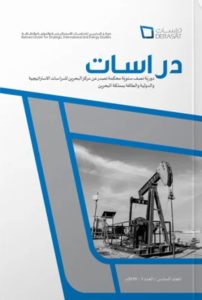
Derasat Journal 2019 – Issue 1
- The Derasat Journal aims to publish rigorous studies on issues related to the Arabian Gulf region, neighboring countries, the Middle East, and the world, particularly with regard to security and defense, economics and energy, from a comprehensive strategic perspective.
- To establish an intellectual dialogue among researchers from the Arabian Gulf region and beyond concerning current challenges and ways to address them.
- To enrich knowledge regarding the Arabian Gulf region and issues of regional and global security.
- Submitted studies must demonstrate originality and provide the journal with “added value,” away from repeating traditional topics, particularly in light of the rapid developments taking place in the region and the world.
- Studies submitted for publication should be relevant to issues concerning the Kingdom of Bahrain and the Gulf states, in addition to regional and international issues that have implications for the Gulf region.
- Submitted studies must maintain objectivity and avoid offending individuals, states, religions, or cultures.
- Studies submitted for publication must not have been previously published elsewhere, whether in print or electronically. The journal retains all intellectual property rights. Therefore, the contributor’s receipt of these conditions along with the assignment email implicitly signifies acceptance of them, and accordingly, the author may not republish material published in the journal elsewhere by any print or electronic means.
- Studies submitted for publication must adhere to recognized academic standards, whether regarding scientific methodology or citation and referencing. The journal follows the Chicago style for references and accepts submissions in both Arabic and English.
- The length of studies submitted for publication should range between 6,000–7,000 words, while book reviews and strategic report reviews should range between 1,500–2,000 words.
The themes of each issue of the journal are announced on the journal’s website at the Bahrain Center for Strategic, International and Energy Studies (DERASAT), inviting submissions related to those themes. Proposals for study ideas are received and discussed by the journal’s Editorial Board, after which the contributor is informed of the Board’s decision. In addition, the Editor-in-Chief may commission certain researchers to prepare studies in line with the journal’s work plan.
- No studies are published in the journal unless approved by the Peer-Review Committee (consisting of two reviewers), which has the authority to accept, reject, or request revisions from the author. The Editor-in-Chief informs the author of the reviewers’ final decision.
- Peer review is conducted by submitting the study without reference to the author’s name, accompanied by the peer-review form published on the journal’s website at the Derasat Center. The form includes four academic criteria: relevance and scope, originality and contribution, theoretical and analytical dimensions, and structure and clarity, in addition to any further comments the reviewer may wish to provide.
- A diverse list of reviewers from various specializations is selected in accordance with the objectives of the journal and the nature of the studies published therein.
Editor-in-Chief
- H.E. Dr. Shaikh Abdulla bin Ahmed bin Abdulla Al Khalifa
Chairman of the Board of Trustees Bahrain Center for Strategic, International and Energy Studies (Derasat) Kingdom of Bahrain
Managing Editor
- Dr. Ashraf Mohammed Keshk
Director of the International and Strategic Studies Program Bahrain Center for Strategic, International and Energy Studies (DERASAT) Kingdom of Bahrain
Dr. Ashraf Mohamed Keshk is a Senior Strategic Studies Expert specializing in Gulf and regional security, with more than three decades of research and academic experience. He received his PhD in Political Science from Cairo University in 2009, with a dissertation on the development of Gulf regional security since 2003: Study on the Impact of NATO Strategy,, which was awarded Best PhD Thesis. In the same year, he obtained a Diploma in Defense Studies from the NATO Defense College in Rome.
He has worked at the Bahrain Center for Strategic, International and Energy Studies (Derasat) since 2012 and currently serves as Director of the Program of Strategic and International Studies. His expertise focuses on Gulf security, defense policies, maritime security, and crisis management. He also served as an Academic Mentor and Lecturer at the NATO Defense College from 2009 to 2018 and has participated extensively in international academic, training, and conference activities.
Dr. Keshk has published extensively on Gulf and regional security. His major books include The Development of Gulf Regional Security since 2003: Study on the Impact of NATO Strategy,, Western Policies Toward the Security of the Arabian Gulf, NATO and the Gulf Countries (Springer, 2021), Maritime Security of the Arab Gulf States (Springer, 2022), and Security and Defense Policies of the Arabian Gulf Countries (2024). He also co-edited Gulf Cooperation Council Achievements and Challenges in 2025.
Associate Editors
- Omar Al-Ubaydli
Studies and Research Director
Bahrain Center for Strategic, International and Energy Studies (DERASAT), Bahrain
- Dr. Abdullah Al-Abbasi
Director of the Energy and Environment Program
Bahrain Center for Strategic, International and Energy Studies (DERASAT), Bahrain
Members
- Dr. Christian Koch
Executive Manager, Gulf Research Center Foundation Brussels and Director of Research
Gulf Research Center Kingdom of Belgium/ Kingdom of Saudi Arabia
- Dr. Osamah Alsayeghi
Research Scientist
Kuwait Institute for Scientific Research (KISR) Nonresident Scholar, Rice University’s Baker Institute for Public Policy State of Kuwait
- Dr. Moataz Salama
Director, Arabian Gulf Program and Head of the Arab and Regional Studies Unit
Al-Ahram Center for Political and Strategic Studies Arab Republic of Egypt
- Dr. Athraa Sayed Abbas Al-Mosawi
Dean of Graduate Studies & Scientific Research, University of Bahrain
Member of the Board of Trustees, Bahrain Center for Strategic, International and Energy Studies (Derasat) Kingdom of Bahrain
The Bahrain Center for Strategic, International and Energy Studies (Derasat) recently published volume 10 of its refereed, semi-annual eponymous journal ‘Derasat’, containing analyses highlighting the most important Gulf-related, regional, and global issues.
In his foreword for this volume, titled “Will we witness a new war in the Gulf?”, Dr. Shaikh Abdulla bin Ahmed Al-Khalifa, Chairman of the Board of Trustees and the journal’s Chief Editor, wrote the following:
In a flaming summer, the Middle East witnessed the impact of a new crisis with the most recent escalation in the Arabian Gulf area, reaching a peak with the terrorist attacks on civilian oil tankers near the al-Fujairah Port and the Sea of Oman, and evidence revealed later implicating Iran as the culprit. This is reminiscent of the 1980s ‘Tanker War’ during the Iran-Iraq War, where Iran targeted GCC oil tankers. The situation further developed with the use of guided missiles or explosive drones to attack two Aramco oil facilities. Investigations are ongoing to pinpoint the source of these attacks, and Saudi Arabia allowed the stationing of US forces in case of any escalation.
The tug-of-war continued, with Iran shooting down a US reconnaissance drone, and the Trump administration imposing new sanctions on Iran’s leadership. The multi-scenario crisis between Washington and Tehran swayed between military escalation and a call to negotiate, and between both options, there was a long series of threatening statements, besides a mutual show of power.
Each party certainly has its specific calculations in this crisis. Iran is feeling the brunt of the US sanctions, the collapse of the nuclear deal, mounting domestic problems, frustration due to the Arab Coalition’s efforts in Yemen, and the loss of full influence on Syria with the rise of Russia’s role and Israel’s rejection of Iranian presence.
We can say that Iran – after the entire four decades of revolution – is not a normal state, and its expansion to control the region is failing against the current reconstruction of the new Middle East. The most the theocratic regime can do is capitalize on external crises that it creates and gets involved in, to distract the Iranian people away from their demands for freedom and decent living.
Meanwhile in the US, the Trump administration seeks to correct the grave mistakes of the Obama administration in the Iranian file. The problem does not lay only in nuclear weapons, but also in Tehran’s hostile behavior towards its neighbors, harboring terrorism, and continuous threats to obstruct international maritime routes.
A principal inquiry remains: is the region on the brink of war? The answer is yes, but it will unlikely witness a war that is rejected by all parts unless a crucial development occurs. At present, Iran turned to threats to fulfill strategic objectives, hoping that escalation would reflect on re-negotiation without substantial concessions. The US, on the other hand, will see presidential elections next year, with no room for risk in facing the American voter with significant human and financial losses. The US is also aware that the crisis with Iran has a whole other dimension related to authority and influence, amid competition from other great powers, and the US administration is ‘projecting power without involvement’.
The Arabian Gulf region – overlooking the most important corridors of international commerce – is of geostrategic importance, for global energy supplies as well as maritime activity. Furthermore, moderate Gulf states are the most trusted and effective partners in achieving regional and global peace.
Based on the aforementioned, attacking oil tankers and facilities demand strict international postures against Iranian threats to safeguard world security, forming a ‘coalition’ to ensure the safety of marine corridors and energy transport, and providing a secure and stable environment amid regional risks and challenges. These efforts must be based on the fundamentals of respecting sovereignty, without interfering in the domestic affairs of states.
Even though moderate Gulf states are not part of the current tensions, they remain cornerstones for security and stability, and they will defend their security and sovereignty quite seriously against any threat, based on international laws and norms.
It remains mandatory and urgent that these states take more precautionary measures and procedures to efficiently and effectively deal with all possible scenarios of this crisis.
This edition includes various topics.
In the Studies section, Dr. Ashraf Kishk – Director of Strategic and International Studies and Journal Editor – presents a study on the Middle East Strategic Alliance ‘MESA’, based on US goals for this alliance as a proposed collective mechanism to achieve security and stability in the Middle East. He follows the origins, content, and objectives of this concept, its impact on Middle East stability, and state positions towards it. He also explores suggested work mechanisms for this alliance to succeed and the challenges it faces.
In the same section, Dr. Omar Al-Ubaydli – Derasat Director of Studies and Research – provides a study on Value Added Tax; one of the most controversial issues in the GCC. VAT is considered among the most important financial mechanisms for government revenues, and three Gulf states – Saudi Arabia, the UAE, and Bahrain – have implemented the tax. This study aims to identify Gulf economic reality in the pre-VAT era, analyzing the VAT tax and how it was devised in the twentieth century, as well as reasons, patterns, and impacts of implementing it by Gulf states.
This issue contains a dossier titled ‘Regional Security Developments and their Impacts on Power Balance’ that examines the most important developments in regional security and their interactions in a global setting, and their impacts on the more-important current regional security equation. Three essential developments are studied in focus. First is a study on ‘US foreign policy and the extent to which it complies with NATO policies towards the Middle East’. The study offers a new important perception of this topic by Dr. Kevin Koehler, comparative political scientist at the Institute of Political Science, Leiden University, Holland. Second is a study titled the ‘US Military Presence in Iraq: Implications and Connotations for Regional Security’. This part follows the evolution of US-Iraq relations since 2003, the controversy surrounding American presence in Iraq, regional dynamics that strategically necessitated that presence for both parties. This part is presented by Dr. Ali Edeen Hilal, Professor of Political Science at Cairo University. Third is a study titled ‘Russia-Iran Relations and their Impacts on Regional Security’. It presents a perception of ‘necessity’ in the Russia – Iran rapprochement due to the Syrian crisis. This does not necessarily mean that the crisis is the main definer of both parties’ relations, as they share mutual interests in other domains. The study provides Gulf states with options to deal with that rapprochement, prepared by Dr. Nadia Saadeddin, a political researcher from Jordan. The contents of all three contributed studies combine to form a complete picture of the latest regional security developments, and their timely and long term impacts on the whole regional security apparatus.
The regional section includes a study titled ‘Terrorist Jihadi Groups and Regional Security in the Arab World: The Current Reality and Future Outlooks’. It aims to answer several queries: which vital indicators decide the future of terrorist groupings in the Arab World?; what possible significant paths are available for these groups to evolve in the short- and medium-terms?; how the Arab region’s security will be affected by the future developments of terrorist groups?; and what are the most important requirements and conditions to develop effective strategies to counter terrorist groups? This study is presented by Professor Hasanain Tawfeeq Ibrahim, Political Scientist and Lecturer at Cairo University and Zayed University.
This issue also includes a review of the latest books and strategic reports covering Gulf issues, with an overview of the most significant events organized by Derasat.
Jihadist Terrorist Organizations and Regional Security in the Arab World: The Current Situation and Future Prospects
President Trump’s Foreign Policy: What Implications for the North Atlantic Treaty Organization (NATO)?
This study seeks to analyze the motives and implications of American foreign policy toward the Middle East region during the era of President Donald Trump. The author argues that this policy fluctuates between nationalist motives and inclinations on the one hand, and a hardline vision regarding threats to regional security—foremost among them Iranian policies—on the other.
The study also examines the extent to which these new American orientations constitute a challenge or problem for its allies, with particular focus on the North Atlantic Treaty Organization, which launched an agenda centered on “projecting stability in the Middle East region.” The author believes that the implications of American policy toward that region may conflict with NATO’s agenda.
The study reached three principal conclusions:
The first: regardless of the direction in which changes in American policy toward the Middle East region may evolve, they reflect the existence of a struggle of forces within the American administration regarding foreign policy during the era of President Trump. It is observed that there is no integrated strategy for this policy; rather, each crisis in the Middle East region is dealt with separately.
The second: the transformations in the implications and mechanisms of American foreign policy toward the Middle East region constitute a major challenge for the North Atlantic Treaty Organization. Although the United States is one of the alliance’s largest members, its calls for the alliance to become more engaged in Middle Eastern crises—despite NATO’s response toward certain issues—conflict with the nature and functions of the alliance.
The third: in light of the disagreements between the United States of America and its European partners—especially regarding the Iranian nuclear issue—it is not expected that significant progress will be achieved regarding this file. This also applies to other challenges in the Middle East region that require consensus between the two sides.
The study also examines the extent to which these new American orientations constitute a challenge or problem for its allies, with particular focus on the North Atlantic Treaty Organization, which launched an agenda centered on “projecting stability in the Middle East region.” The author believes that the implications of American policy toward that region may conflict with NATO’s agenda.
The study reached three principal conclusions:
The first: regardless of the direction in which changes in American policy toward the Middle East region may evolve, they reflect the existence of a struggle of forces within the American administration regarding foreign policy during the era of President Trump. It is observed that there is no integrated strategy for this policy; rather, each crisis in the Middle East region is dealt with separately.
The second: the transformations in the implications and mechanisms of American foreign policy toward the Middle East region constitute a major challenge for the North Atlantic Treaty Organization. Although the United States is one of the alliance’s largest members, its calls for the alliance to become more engaged in Middle Eastern crises—despite NATO’s response toward certain issues—conflict with the nature and functions of the alliance.
The third: in light of the disagreements between the United States of America and its European partners—especially regarding the Iranian nuclear issue—it is not expected that significant progress will be achieved regarding this file. This also applies to other challenges in the Middle East region that require consensus between the two sides.
Russian-Iranian Relations and Their Impact on Regional Security
First: the principal idea of this study is the characterization of this alliance as an “alliance of necessity,” despite the numerous indicators of Russian-Iranian rapprochement, which became more evident following the Russian intervention in the Syrian crisis. However, this rapprochement has not risen to the level of genuine alliances, given that each side seeks to benefit tactically from the developments of the Syrian crisis and the current regional situation. Although the study addresses areas of cooperation between the two sides on the military, security, and economic levels, there are factors explaining this cooperation that are not connected to a strategic vision of genuine rapprochement as much as they are linked to areas of convergence regarding a shared challenge perceived by both sides.
Second: despite the deep Russian-Iranian disagreements, the occurrence of an open conflict between them remains unlikely. Iran does not desire such a conflict because it is under international political pressure and burdensome economic sanctions. In addition, both sides are keen to avoid reaching that stage because each needs the other, at least for the present time.
Third: the development of Russian-Iranian relations in the manner referred to above necessitates that the Gulf states begin a partnership with Russia in various vital fields. This would constitute a response to the impact of Russian-Iranian rapprochement on regional security, which represents a challenge to the strategic interests of the Gulf security system as a whole.
Second: despite the deep Russian-Iranian disagreements, the occurrence of an open conflict between them remains unlikely. Iran does not desire such a conflict because it is under international political pressure and burdensome economic sanctions. In addition, both sides are keen to avoid reaching that stage because each needs the other, at least for the present time.
Third: the development of Russian-Iranian relations in the manner referred to above necessitates that the Gulf states begin a partnership with Russia in various vital fields. This would constitute a response to the impact of Russian-Iranian rapprochement on regional security, which represents a challenge to the strategic interests of the Gulf security system as a whole.
The American Military Presence in Iraq: Implications and Significance for Regional Security
This paper addresses the implications and mechanisms of American policy toward Iraq in light of the considerable debate surrounding this issue, not only among certain political currents within Iraq, but also as an attempt to understand this policy, especially following President Donald Trump’s announcement of withdrawal from Syria in December 2018. The paper seeks to discuss the issue of the American military presence in Iraq from all its aspects, beginning with tracing the development of these relations from 2003 until the present, passing through the debate raised within Iraq regarding this presence, and ending with the Iranian threat as a principal objective of that presence. It also addresses the regional variables that have made this presence a strategic necessity for both the United States and Iraq, in addition to analyzing the impact of this presence on regional security.
The study reached three principal conclusions:
First: the decision of the United States of America to maintain American forces in a particular state is not an easy decision, but rather one governed by numerous considerations. In the case of Iraq, it is observed that there is a shared interest between the United States and Iraq regarding this presence, which is governed by specific rules that preserve Iraqi sovereignty.
Second: in light of the security challenges currently facing Iraq on the one hand, and the growing Iranian influence on the other, there is no room for discussing the withdrawal of American forces from Iraq in the foreseeable future.
Third: although there is a tendency within the current American administration toward what may be called “relative retrenchment from Middle Eastern crises,” or rather reliance on regional actors to confront regional security challenges, the growing Russian role in the Arab region in general, and in the Syrian crisis in particular, as well as the development of Russian-Turkish relations, all constitute developments that impose challenges on American strategies and may perhaps become a reason for their reconsideration.
The study reached three principal conclusions:
First: the decision of the United States of America to maintain American forces in a particular state is not an easy decision, but rather one governed by numerous considerations. In the case of Iraq, it is observed that there is a shared interest between the United States and Iraq regarding this presence, which is governed by specific rules that preserve Iraqi sovereignty.
Second: in light of the security challenges currently facing Iraq on the one hand, and the growing Iranian influence on the other, there is no room for discussing the withdrawal of American forces from Iraq in the foreseeable future.
Third: although there is a tendency within the current American administration toward what may be called “relative retrenchment from Middle Eastern crises,” or rather reliance on regional actors to confront regional security challenges, the growing Russian role in the Arab region in general, and in the Syrian crisis in particular, as well as the development of Russian-Turkish relations, all constitute developments that impose challenges on American strategies and may perhaps become a reason for their reconsideration.
Value Added Tax and Its Impact on the Economies of the Arabian Gulf States
This study addresses one of the most important economic issues that has generated debate in the Gulf Cooperation Council states, namely the “Value Added Tax,” which is considered one of the principal financial mechanisms for government revenues. Three Gulf states have already begun implementing this tax: the Kingdom of Saudi Arabia, the United Arab Emirates, and the Kingdom of Bahrain. This is due to several reasons, including population growth and consequently increased needs, in addition to the decline in oil prices and the budget deficits this has caused in these states.
Although the imposition of taxes in general is not a new matter, since many countries around the world apply this tax, the novelty of its implementation in the Gulf states has raised questions regarding the substance of this tax and its effects. Accordingly, this study addresses this issue through analyzing three elements:
First: the reality of Gulf economies in the period preceding the imposition of this tax.
Second: analyzing the principles of value added tax and its emergence in the twentieth century.
Third: the implementation of value added tax in the Gulf states in terms of reasons, patterns, advantages, and effects.
The study reached three principal conclusions:
First: value added tax has many benefits for Gulf economies, including generating significant revenues, diversifying sources of government income, contributing to improving the credit rating of sovereign government bonds, and strengthening the confidence of foreign investors in Gulf economies, thereby enhancing the attractiveness of Gulf economies to them.
Second: in light of the need for value added tax as one of the sources of government financial funding, when comparing it as a government fiscal policy, this comparison should be made with other types of taxes, particularly in light of the challenges facing the budgets of the Gulf states and their previous dependence on financial means that are not sustainable.
Third: in light of the economic challenges currently facing the Gulf states, it is expected that other Gulf states will begin implementing this tax, and perhaps even increase its rate in order to diversify public revenues.
Although the imposition of taxes in general is not a new matter, since many countries around the world apply this tax, the novelty of its implementation in the Gulf states has raised questions regarding the substance of this tax and its effects. Accordingly, this study addresses this issue through analyzing three elements:
First: the reality of Gulf economies in the period preceding the imposition of this tax.
Second: analyzing the principles of value added tax and its emergence in the twentieth century.
Third: the implementation of value added tax in the Gulf states in terms of reasons, patterns, advantages, and effects.
The study reached three principal conclusions:
First: value added tax has many benefits for Gulf economies, including generating significant revenues, diversifying sources of government income, contributing to improving the credit rating of sovereign government bonds, and strengthening the confidence of foreign investors in Gulf economies, thereby enhancing the attractiveness of Gulf economies to them.
Second: in light of the need for value added tax as one of the sources of government financial funding, when comparing it as a government fiscal policy, this comparison should be made with other types of taxes, particularly in light of the challenges facing the budgets of the Gulf states and their previous dependence on financial means that are not sustainable.
Third: in light of the economic challenges currently facing the Gulf states, it is expected that other Gulf states will begin implementing this tax, and perhaps even increase its rate in order to diversify public revenues.
نشر مركز البحرين للدراسات الاستراتيجية والدولية والطاقة (دراسات) عددًا جديدًا من مجلة دراسات، وهي مجلة علمية نصف سنوية محكمة، تناولت عدة قضايا سياسية واقتصادية وأمنية من منظور استراتيجي.لمزيد من المعلومات حول كيفية الوصول إلى المجلة، التي تنشر باللغة العربية فقط
This paper seeks to examine the proposal of the United States of America to establish the Middle East Strategic Alliance “MESA” as a collective mechanism for achieving security and stability in the Middle East region. This is done through tracing the roots of this idea, its substance, objectives, and impact on stability in the Middle East region, as well as the positions of different states toward it, and, more importantly, the mechanisms of operation of this alliance, the foundations of its success, and the challenges facing its work.
The paper reached three principal conclusions:
The first: according to the official statements issued regarding the nature of this alliance, it will constitute a multilateral collective framework for enhancing cooperation in the political, economic, security, and defense fields, and may perhaps develop in the future into a more advanced formula.
The second: there are several factors that may represent essential pillars for the success of this alliance, including the strategic relations between the United States of America and the alliance member states, in addition to the development of the military structure of the Gulf states, as well as the possibility of distributing tasks among alliance members. This would enable the alliance to confront the challenges in the Middle East and Arabian Gulf regions, namely Iranian threats and terrorism, in addition to the alliance’s role in achieving the concept of balance of power.
The third: despite the importance of this alliance, several questions continue to be raised regarding it, including: What is the legal basis for the alliance’s work? What is the possibility of the alliance intervening in current or future regional crises? What is the possibility of the emergence of counter-alliances? And what is the impact of the historical experience of the Arab region’s states regarding alliances on the work of this alliance?
The paper reached three principal conclusions:
The first: according to the official statements issued regarding the nature of this alliance, it will constitute a multilateral collective framework for enhancing cooperation in the political, economic, security, and defense fields, and may perhaps develop in the future into a more advanced formula.
The second: there are several factors that may represent essential pillars for the success of this alliance, including the strategic relations between the United States of America and the alliance member states, in addition to the development of the military structure of the Gulf states, as well as the possibility of distributing tasks among alliance members. This would enable the alliance to confront the challenges in the Middle East and Arabian Gulf regions, namely Iranian threats and terrorism, in addition to the alliance’s role in achieving the concept of balance of power.
The third: despite the importance of this alliance, several questions continue to be raised regarding it, including: What is the legal basis for the alliance’s work? What is the possibility of the alliance intervening in current or future regional crises? What is the possibility of the emergence of counter-alliances? And what is the impact of the historical experience of the Arab region’s states regarding alliances on the work of this alliance?

