

The events and developments witnessed in the Syrian arena since mid-2011 evolved into a complex crisis in terms of its dimensions, actors, and repercussions. This crisis became even more complicated when local, regional, and international actors and dimensions became intertwined, turning the Syrian arena into a field for wagering and adventurism aimed at gaining influence and securing interests on the one hand, and settling scores with rivals on the other.
Blatant interventions took various forms, including political and military interventions, as well as direct and indirect involvement in Syria, with different actors supporting one of the Syrian parties. Perhaps the most significant party to have engaged in direct intervention in various forms among the major world powers was Russia, whose presence and influence in the Syrian file became evident from the very beginning through influential political intervention, which soon transformed into direct military intervention in support of the Assad regime.
Intervention, in its general sense, includes all external activities directed toward another state with the aim of controlling, changing, or influencing its policies, political system, and leadership, whether to preserve that system or alter the constitution partially or entirely. The Russian intervention in Syria represents a comprehensive intervention in the developments of the Syrian issue through providing political, economic, and military support to the Assad regime against the Syrian opposition movements.
The Russian intervention in the Syrian arena raises several questions, perhaps the most important of which is: Why did Russia decisively choose to intervene in Syrian affairs to the extent that it became one of the principal actors in the Syrian issue?
In reality, this intervention was based on a set of internal, regional, and international motives that drove the Russian adventure to consolidate its influence in the region. However, at the same time, it faces several challenges and produces various repercussions with differing impacts. All of this should be examined and analyzed in this research in order to understand and comprehend the nature of the Russian intervention in the Syrian issue.
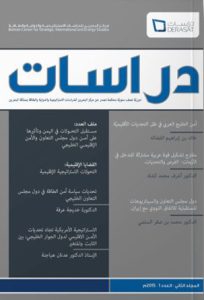
Derasat Journal 2015 – Issue 2
- The Derasat Journal aims to publish rigorous studies on issues related to the Arabian Gulf region, neighboring countries, the Middle East, and the world, particularly with regard to security and defense, economics and energy, from a comprehensive strategic perspective.
- To establish an intellectual dialogue among researchers from the Arabian Gulf region and beyond concerning current challenges and ways to address them.
- To enrich knowledge regarding the Arabian Gulf region and issues of regional and global security.
- Submitted studies must demonstrate originality and provide the journal with “added value,” away from repeating traditional topics, particularly in light of the rapid developments taking place in the region and the world.
- Studies submitted for publication should be relevant to issues concerning the Kingdom of Bahrain and the Gulf states, in addition to regional and international issues that have implications for the Gulf region.
- Submitted studies must maintain objectivity and avoid offending individuals, states, religions, or cultures.
- Studies submitted for publication must not have been previously published elsewhere, whether in print or electronically. The journal retains all intellectual property rights. Therefore, the contributor’s receipt of these conditions along with the assignment email implicitly signifies acceptance of them, and accordingly, the author may not republish material published in the journal elsewhere by any print or electronic means.
- Studies submitted for publication must adhere to recognized academic standards, whether regarding scientific methodology or citation and referencing. The journal follows the Chicago style for references and accepts submissions in both Arabic and English.
- The length of studies submitted for publication should range between 6,000–7,000 words, while book reviews and strategic report reviews should range between 1,500–2,000 words.
The themes of each issue of the journal are announced on the journal’s website at the Bahrain Center for Strategic, International and Energy Studies (DERASAT), inviting submissions related to those themes. Proposals for study ideas are received and discussed by the journal’s Editorial Board, after which the contributor is informed of the Board’s decision. In addition, the Editor-in-Chief may commission certain researchers to prepare studies in line with the journal’s work plan.
- No studies are published in the journal unless approved by the Peer-Review Committee (consisting of two reviewers), which has the authority to accept, reject, or request revisions from the author. The Editor-in-Chief informs the author of the reviewers’ final decision.
- Peer review is conducted by submitting the study without reference to the author’s name, accompanied by the peer-review form published on the journal’s website at the Derasat Center. The form includes four academic criteria: relevance and scope, originality and contribution, theoretical and analytical dimensions, and structure and clarity, in addition to any further comments the reviewer may wish to provide.
- A diverse list of reviewers from various specializations is selected in accordance with the objectives of the journal and the nature of the studies published therein.
Editor-in-Chief
- H.E. Dr. Shaikh Abdulla bin Ahmed bin Abdulla Al Khalifa
Chairman of the Board of Trustees Bahrain Center for Strategic, International and Energy Studies (Derasat) Kingdom of Bahrain
Managing Editor
- Dr. Ashraf Mohammed Keshk
Director of the International and Strategic Studies Program Bahrain Center for Strategic, International and Energy Studies (DERASAT) Kingdom of Bahrain
Dr. Ashraf Mohamed Keshk is a Senior Strategic Studies Expert specializing in Gulf and regional security, with more than three decades of research and academic experience. He received his PhD in Political Science from Cairo University in 2009, with a dissertation on the development of Gulf regional security since 2003: Study on the Impact of NATO Strategy,, which was awarded Best PhD Thesis. In the same year, he obtained a Diploma in Defense Studies from the NATO Defense College in Rome.
He has worked at the Bahrain Center for Strategic, International and Energy Studies (Derasat) since 2012 and currently serves as Director of the Program of Strategic and International Studies. His expertise focuses on Gulf security, defense policies, maritime security, and crisis management. He also served as an Academic Mentor and Lecturer at the NATO Defense College from 2009 to 2018 and has participated extensively in international academic, training, and conference activities.
Dr. Keshk has published extensively on Gulf and regional security. His major books include The Development of Gulf Regional Security since 2003: Study on the Impact of NATO Strategy,, Western Policies Toward the Security of the Arabian Gulf, NATO and the Gulf Countries (Springer, 2021), Maritime Security of the Arab Gulf States (Springer, 2022), and Security and Defense Policies of the Arabian Gulf Countries (2024). He also co-edited Gulf Cooperation Council Achievements and Challenges in 2025.
Associate Editors
- Omar Al-Ubaydli
Studies and Research Director
Bahrain Center for Strategic, International and Energy Studies (DERASAT), Bahrain
- Dr. Abdullah Al-Abbasi
Director of the Energy and Environment Program
Bahrain Center for Strategic, International and Energy Studies (DERASAT), Bahrain
Members
- Dr. Christian Koch
Executive Manager, Gulf Research Center Foundation Brussels and Director of Research
Gulf Research Center Kingdom of Belgium/ Kingdom of Saudi Arabia
- Dr. Osamah Alsayeghi
Research Scientist
Kuwait Institute for Scientific Research (KISR) Nonresident Scholar, Rice University’s Baker Institute for Public Policy State of Kuwait
- Dr. Moataz Salama
Director, Arabian Gulf Program and Head of the Arab and Regional Studies Unit
Al-Ahram Center for Political and Strategic Studies Arab Republic of Egypt
- Dr. Athraa Sayed Abbas Al-Mosawi
Dean of Graduate Studies & Scientific Research, University of Bahrain
Member of the Board of Trustees, Bahrain Center for Strategic, International and Energy Studies (Derasat) Kingdom of Bahrain
A semi-annual specialized journal issued by the Bahrain Center for Strategic, International and Energy Studies in the Kingdom of Bahrain. The journal aims to public studies and reports on political, international, economic, security, energy, and cyberspace issues that relate to strategic issues in the broad sense of the term, and that focus on Arabian Gulf issues in Arabic and English.
An Adventure for Influence: A Reading of the Russian Intervention in Syria
Can Economic Integration Among the Gulf Cooperation Council States Provide Employment Opportunities for Its Citizens?
This study examines the relationship between economic integration and job creation in the Gulf Cooperation Council (GCC) states, focusing on the opportunities and challenges associated with employing Gulf citizens in an increasingly integrated regional economy. Despite significant progress in economic cooperation among GCC countries, including the customs union, the Gulf Common Market, and initiatives toward monetary and infrastructural integration, unemployment among citizens and the heavy dependence on expatriate labor remain major structural challenges. The study highlights that GCC economies have historically relied on low-cost foreign labor in the private sector, resulting in weak productivity growth, limited citizen participation in private employment, and a persistent preference among nationals for public sector jobs.
The paper argues that economic integration can contribute to sustainable job creation through expanding regional markets, increasing trade and investment flows, enhancing competitiveness, facilitating labor and capital mobility, and encouraging specialization based on comparative advantages. It also demonstrates that integration can improve productivity, stimulate innovation, and strengthen the region’s position within global value chains. However, the study emphasizes that integration alone does not automatically generate employment opportunities for citizens unless accompanied by broader labor market reforms, educational improvements, and regulatory harmonization across member states.
The study further analyzes the practical outcomes of GCC integration, including growth in intra-regional trade, cross-border investments, tourism, and labor mobility. Nevertheless, it points to continuing obstacles such as fragmented regulations, restrictions in service sectors, limited labor mobility for citizens, and the dominance of low-productivity economic activities. The paper concludes that maximizing the employment benefits of GCC integration requires deeper economic coordination, private sector development, stronger support for entrepreneurship and innovation, and comprehensive labor market reforms aimed at increasing citizen participation in productive private sector employment. Sustainable economic diversification and regional openness, combined with investments in human capital, remain essential for the long-term prosperity and stability of GCC economies.
The paper argues that economic integration can contribute to sustainable job creation through expanding regional markets, increasing trade and investment flows, enhancing competitiveness, facilitating labor and capital mobility, and encouraging specialization based on comparative advantages. It also demonstrates that integration can improve productivity, stimulate innovation, and strengthen the region’s position within global value chains. However, the study emphasizes that integration alone does not automatically generate employment opportunities for citizens unless accompanied by broader labor market reforms, educational improvements, and regulatory harmonization across member states.
The study further analyzes the practical outcomes of GCC integration, including growth in intra-regional trade, cross-border investments, tourism, and labor mobility. Nevertheless, it points to continuing obstacles such as fragmented regulations, restrictions in service sectors, limited labor mobility for citizens, and the dominance of low-productivity economic activities. The paper concludes that maximizing the employment benefits of GCC integration requires deeper economic coordination, private sector development, stronger support for entrepreneurship and innovation, and comprehensive labor market reforms aimed at increasing citizen participation in productive private sector employment. Sustainable economic diversification and regional openness, combined with investments in human capital, remain essential for the long-term prosperity and stability of GCC economies.
Food, Water, and Agricultural Trade in the Gulf Cooperation Council States: An Economic Perspective
This study examines the interrelated challenges of food security, water scarcity, and agricultural trade in the Gulf Cooperation Council (GCC) states, emphasizing the economic implications of dependence on hydrocarbon revenues and imported food supplies. The GCC countries possess substantial oil and natural gas resources that have generated high levels of income and economic growth; however, they also face severe environmental constraints, including arid climates, poor soil quality, and extreme water scarcity. These structural limitations have made the region heavily reliant on food imports, while rapid population growth and climate change concerns have intensified pressures on water and food systems.
The study highlights the impact of fluctuating oil prices on Gulf economies and discusses how declining energy revenues may affect the sustainability of food and water subsidies. It also analyzes the implications of technological developments in global energy markets, including shale oil production and liquefied natural gas (LNG), which may contribute to long-term shifts in global energy demand and pricing. Against this backdrop, the paper evaluates policy responses adopted by GCC governments, including sovereign wealth funds, economic diversification strategies, agricultural subsidies, desalination projects, and investments in foreign agricultural land.
The study argues that water scarcity remains the principal constraint on agricultural production in the Gulf, making large-scale domestic food production economically costly and environmentally unsustainable. It further contends that global food markets, strategic reserves, and cooperation with major trading powers provide more effective and less costly mechanisms for ensuring food security than heavily subsidized local agricultural production. The paper concludes that long-term food and water security in the GCC requires balanced economic reforms, more efficient resource management, reduced dependence on subsidies, and stronger international cooperation to secure global trade routes and food supply chains.
The study highlights the impact of fluctuating oil prices on Gulf economies and discusses how declining energy revenues may affect the sustainability of food and water subsidies. It also analyzes the implications of technological developments in global energy markets, including shale oil production and liquefied natural gas (LNG), which may contribute to long-term shifts in global energy demand and pricing. Against this backdrop, the paper evaluates policy responses adopted by GCC governments, including sovereign wealth funds, economic diversification strategies, agricultural subsidies, desalination projects, and investments in foreign agricultural land.
The study argues that water scarcity remains the principal constraint on agricultural production in the Gulf, making large-scale domestic food production economically costly and environmentally unsustainable. It further contends that global food markets, strategic reserves, and cooperation with major trading powers provide more effective and less costly mechanisms for ensuring food security than heavily subsidized local agricultural production. The paper concludes that long-term food and water security in the GCC requires balanced economic reforms, more efficient resource management, reduced dependence on subsidies, and stronger international cooperation to secure global trade routes and food supply chains.
Gulf Economic Development: Recommendations Based on the Greek Debt Crisis
Since the launch of the Gulf Cooperation Council project in 1981, Gulf economic integration has occupied an important place within the proposed and implemented plans. The member states progressed from basic economic relations to a free trade agreement, a customs union, a common market, and finally to tangible steps toward a unified currency. The enthusiasm of the Gulf states for economic integration stems partly from the successful experience of the European Union, particularly prior to the unified currency phase (1999–present). This experience preceded its Gulf counterpart and thus represented an attractive model for the GCC states regarding the economic gains available through economic integration.
However, in light of the Greek debt crisis that erupted in 2010, many European citizens began to question the benefits of economic integration and seriously considered withdrawing from the unified currency and re-establishing the barriers that had been removed over the previous fifty years. Nevertheless, if the Greek crisis is analyzed correctly, it is possible to identify the non-economic factors, including political considerations, that transformed a Greek problem into a European problem threatening the integration project itself. In reality, economic integration remains a constructive policy that serves the interests of the Gulf Cooperation Council states, provided that the mistakes committed by the European Union are avoided.
However, in light of the Greek debt crisis that erupted in 2010, many European citizens began to question the benefits of economic integration and seriously considered withdrawing from the unified currency and re-establishing the barriers that had been removed over the previous fifty years. Nevertheless, if the Greek crisis is analyzed correctly, it is possible to identify the non-economic factors, including political considerations, that transformed a Greek problem into a European problem threatening the integration project itself. In reality, economic integration remains a constructive policy that serves the interests of the Gulf Cooperation Council states, provided that the mistakes committed by the European Union are avoided.
State Sovereignty in the New Global Space: Between Its Traditional Absence and Its Digital Fragility
With the rapid development of science and knowledge, a new global space has emerged in which digital technologies have merged with the daily lives of individuals and societies. The world has witnessed a radical transformation in the concept of state sovereignty within its regional borders, as it was historically known and recognized under international law.
From this perspective, the study identifies the manner in which traditional space has intersected with the invisible digital space, and how this overlap has led to the erosion of the traditional geographical and political borders of states, thereby facilitating violations of their sovereignty in the absence of sufficient international laws and appropriate tools to deter such political breaches and international interventions in the domestic affairs of states.
The study was divided into three sections. The first section discussed the historical development of the concept of state sovereignty beginning with the Peace of Westphalia, which established major foundations represented by the principles of recognition of the state, its absolute sovereignty, its right to determine its political destiny, the principle of non-interference in the internal affairs of states — whether political or religious — the binding nature of treaties between states, and the demarcation of international borders among them.
The second section discussed the interrelationship between lived reality and the principles of state sovereignty through globalization projects that were created and promoted across various countries of the world. These projects generated numerous activities and initiatives through which the role of governments within their sovereign borders was neutralized, such as the concept of trade liberalization free from governmental restrictions and the privatization of government projects. Consequently, the governments of small states found themselves confronting international organizations and institutions that formulate and control the most important global policies. As a result of all this, the systems and balances of developing states became destabilized, their foundations weakened, and the sanctity of their borders violated within the new space of globalization.
In the third section, the study discussed the information revolution and its relationship to digital space, as well as the violations that have increasingly targeted state sovereignty through this new space using cross-border digital tools, and it called for the development of laws related to state security and sovereignty in digital space.
From this perspective, the study identifies the manner in which traditional space has intersected with the invisible digital space, and how this overlap has led to the erosion of the traditional geographical and political borders of states, thereby facilitating violations of their sovereignty in the absence of sufficient international laws and appropriate tools to deter such political breaches and international interventions in the domestic affairs of states.
The study was divided into three sections. The first section discussed the historical development of the concept of state sovereignty beginning with the Peace of Westphalia, which established major foundations represented by the principles of recognition of the state, its absolute sovereignty, its right to determine its political destiny, the principle of non-interference in the internal affairs of states — whether political or religious — the binding nature of treaties between states, and the demarcation of international borders among them.
The second section discussed the interrelationship between lived reality and the principles of state sovereignty through globalization projects that were created and promoted across various countries of the world. These projects generated numerous activities and initiatives through which the role of governments within their sovereign borders was neutralized, such as the concept of trade liberalization free from governmental restrictions and the privatization of government projects. Consequently, the governments of small states found themselves confronting international organizations and institutions that formulate and control the most important global policies. As a result of all this, the systems and balances of developing states became destabilized, their foundations weakened, and the sanctity of their borders violated within the new space of globalization.
In the third section, the study discussed the information revolution and its relationship to digital space, as well as the violations that have increasingly targeted state sovereignty through this new space using cross-border digital tools, and it called for the development of laws related to state security and sovereignty in digital space.
Strategic Dialogues of the Gulf Cooperation Council States as a Tool for Enhancing Regional and International Influence
This study examines the role of strategic dialogues of the Gulf Cooperation Council (GCC) states as a tool for enhancing their regional and international influence amid the political and security transformations that have shaped the Gulf region since the British withdrawal from East of Suez and the establishment of the GCC in 1981 to address the resulting political and security vacuum and confront regional challenges, particularly Iranian expansionism. The study also reviews the role of the United States in protecting strategic and economic interests in the Gulf following the British withdrawal, as well as the impact of the 1979 Iranian Revolution on regional dynamics and the subsequent regional crises and wars.
The study focuses on the GCC states’ efforts to employ strategic dialogues with friendly countries and major economic blocs as a mechanism for strengthening political, economic, and security relations, particularly after the GCC Ministerial Council’s 2001 decision to develop a comprehensive vision for benefiting from such dialogues. It further highlights the core principles underlying these strategic partnerships, including respect for sovereignty, territorial integrity, and non-interference in internal affairs, in addition to areas of cooperation such as political and diplomatic coordination, security and defense cooperation, economic relations, scientific and strategic research collaboration, and parliamentary and youth relations.
The study concludes that strategic dialogues have contributed significantly to strengthening GCC international relations, facilitating expertise exchange, supporting economic development and regional stability, and creating broader opportunities for investment and trade cooperation. It also emphasizes the importance of maintaining and further developing these dialogues in order to serve the shared strategic interests of the GCC states and their international partners.
The study focuses on the GCC states’ efforts to employ strategic dialogues with friendly countries and major economic blocs as a mechanism for strengthening political, economic, and security relations, particularly after the GCC Ministerial Council’s 2001 decision to develop a comprehensive vision for benefiting from such dialogues. It further highlights the core principles underlying these strategic partnerships, including respect for sovereignty, territorial integrity, and non-interference in internal affairs, in addition to areas of cooperation such as political and diplomatic coordination, security and defense cooperation, economic relations, scientific and strategic research collaboration, and parliamentary and youth relations.
The study concludes that strategic dialogues have contributed significantly to strengthening GCC international relations, facilitating expertise exchange, supporting economic development and regional stability, and creating broader opportunities for investment and trade cooperation. It also emphasizes the importance of maintaining and further developing these dialogues in order to serve the shared strategic interests of the GCC states and their international partners.

